

Have you ever felt like your cat might be stressed? Perhaps it hides in the closet when guests arrive, its appetite decreases after moving, or it approaches new furniture with caution. Cat stress signals can be subtle, and it's not uncommon for several days to pass before an owner notices.

Generated by AI
Research Shows Earlier Stress Stabilization in Shelters with Hiding Spaces
A study by Vinke, Godijn & van der Leij (2014) investigated how stress levels in shelter cats changed with or without a hiding box. The results showed that cats provided with a hiding box stabilized their stress levels 7 days earlier than those without one. Seven days, or about a week. While the number may seem small, a week of stress in an unfamiliar environment is not short for a cat. This result has been replicated in subsequent research, with similar trends confirmed in a 12-day follow-up study by van der Leij et al. (2019).
The Need for Hiding Places, Common to House Cats
While the environments of shelter cats and house cats differ, the instinct to seek safety by hiding is common. Cats have a wide field of vision and are sensitive to sounds. I believe they feel a sense of security, "I can rest assured here," when they have an enclosed space where they can survey their surroundings and fit their body. In an environment without hiding places, they must constantly remain alert to their surroundings. This chronic state of tension seems to be a burden for cats.
A study by Ellis et al. (2021) showed that providing hiding places and shelves significantly reduced stress hormones (fecal glucocorticoid metabolites) in cats. What's interesting about this study is that the effect was greater for shy cats. For cats that are highly cautious and slow to warm up to people, or those that immediately hide when guests arrive, having a safe place to hide seems to make a difference measurable in their physical responses.

Cat Cellar and its Design as a Hiding Place
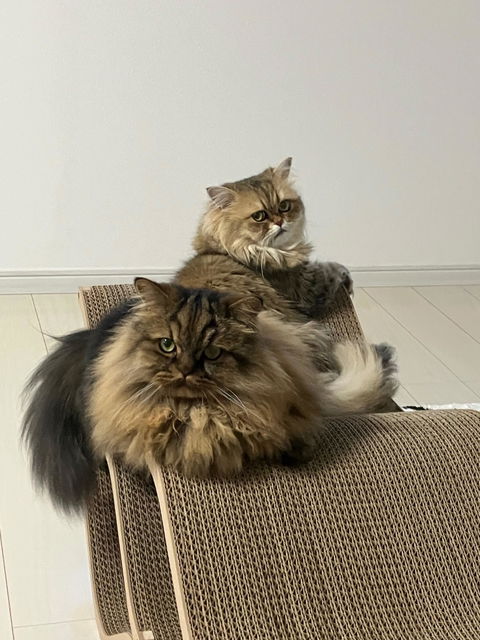
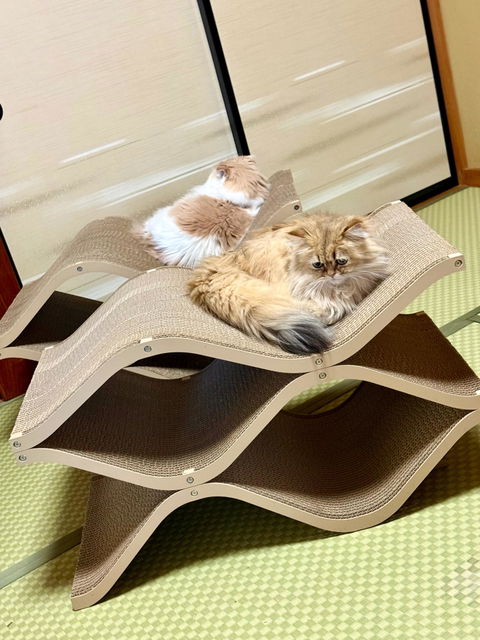
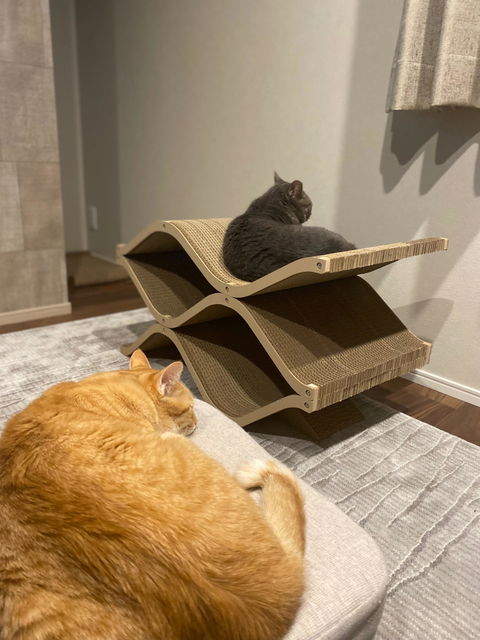
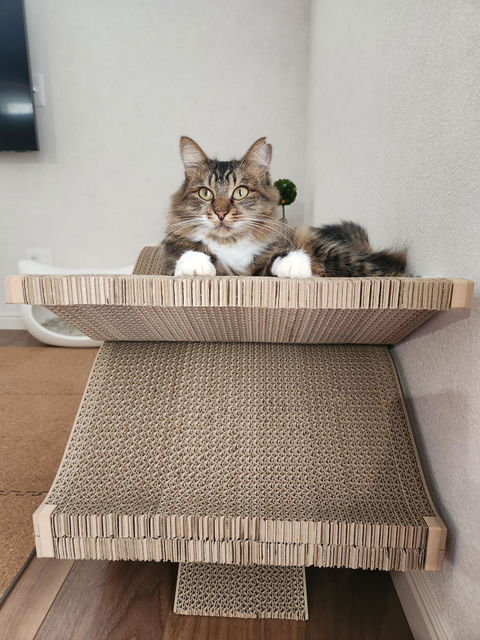
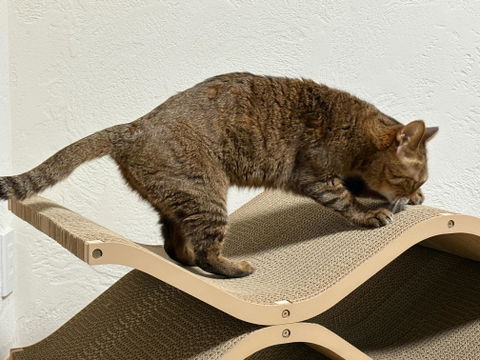
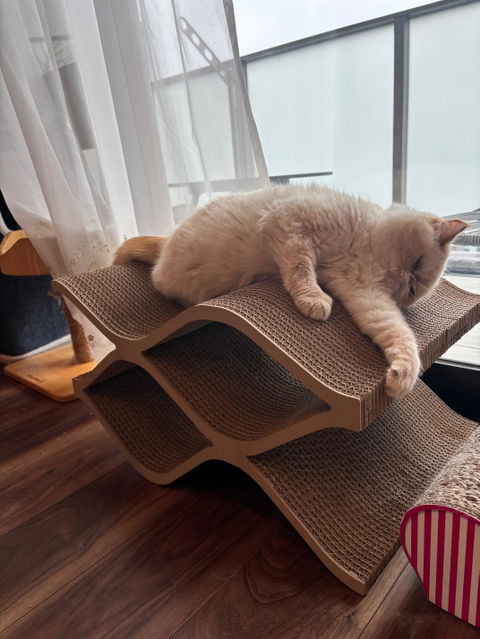
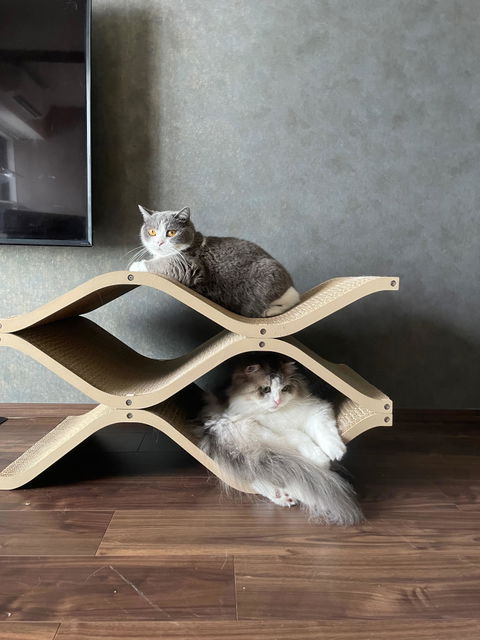
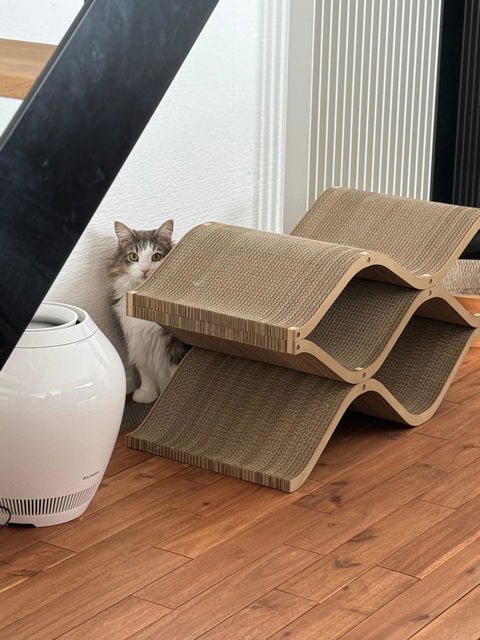
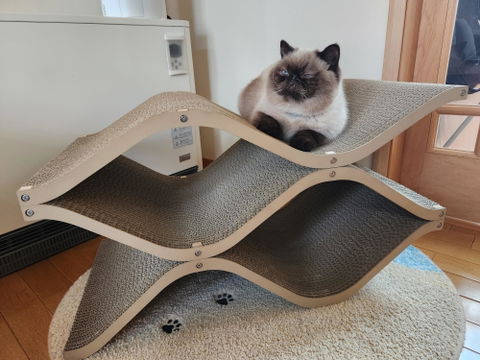
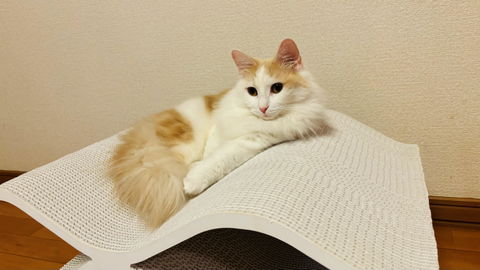
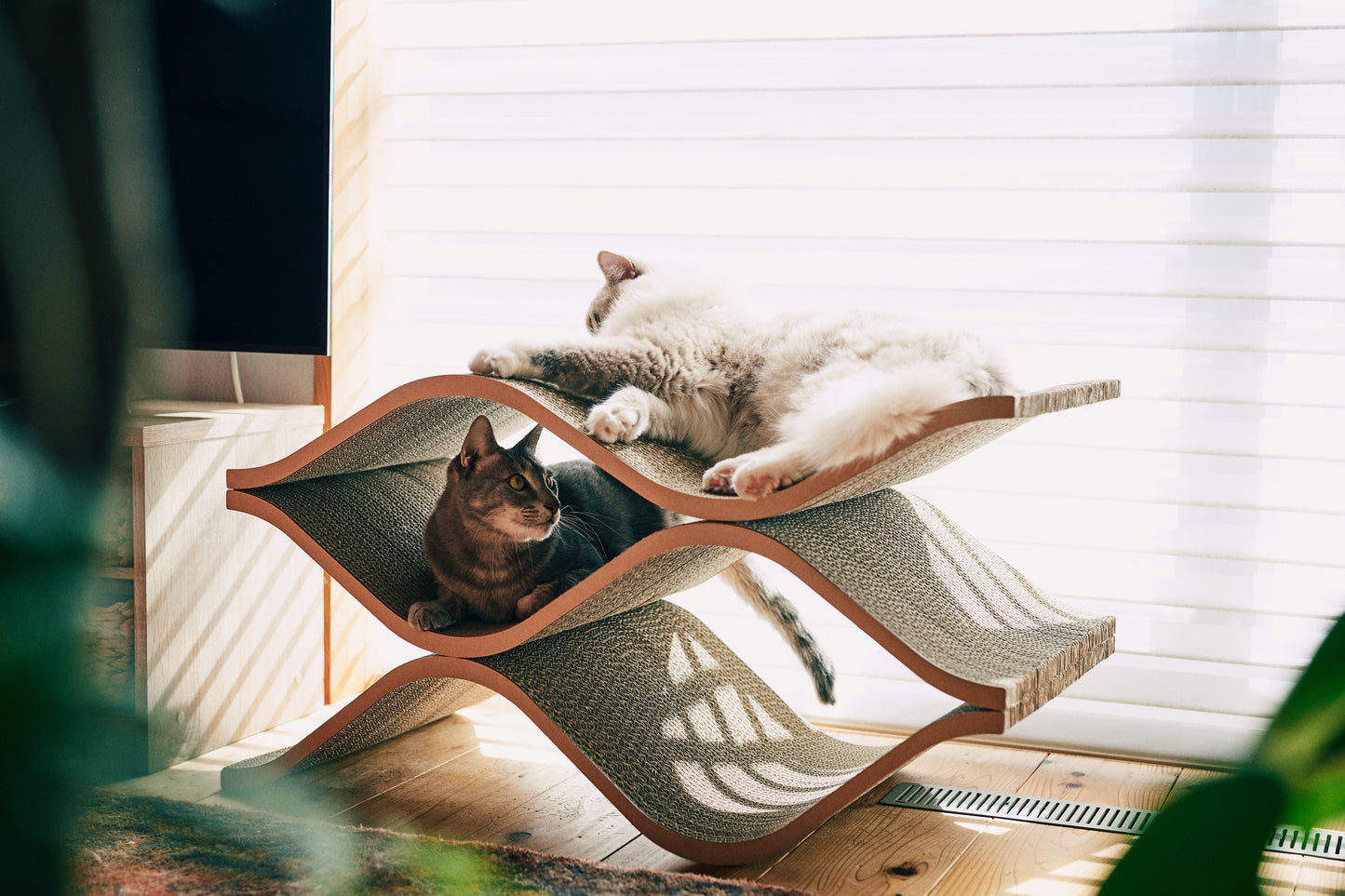
The Cat Cellar has multiple holes. While often used as a scratching post or a lounging platform, we also hear comments like "they poke their head into the hole and calm down" or "they put half their body in and watch outside." Even if their entire body isn't hidden, merely having a space where their body can "enter" might change how cats feel.
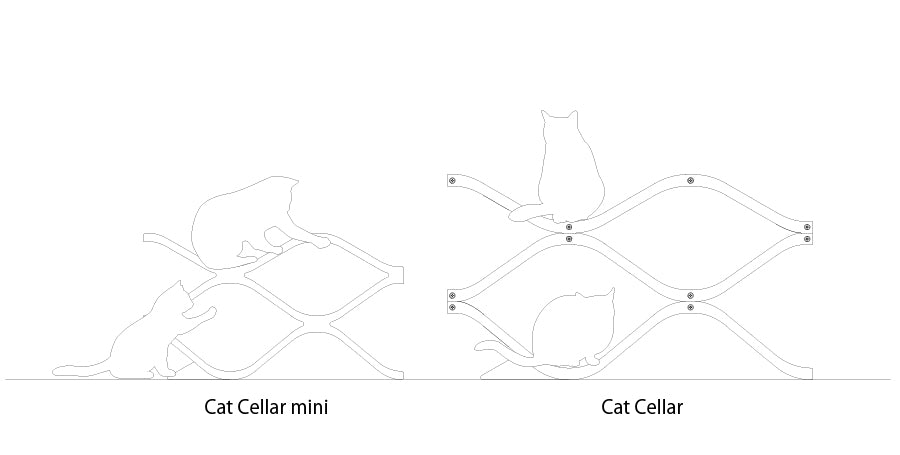
The S-shaped winding structure creates a "recess" within its curves, providing stability when a cat settles there. While surrounded, the cat's front and back vision is secured. This state of "hiding while being able to see" is, I believe, close to the conditions of a place cats instinctively prefer. It's neither a completely enclosed space nor a completely open space. Somewhere in between seems to be a comfortable spot for many cats.

The idea of "creating one safe place to hide" is a very simple approach to cat environmental enrichment. Even without major redecorating, simply placing one item can change a cat's resting spot. While the "effect of a hiding place" shown in research may or may not apply to individual house cats, I believe it's worth trying. Especially for cats that are inherently cautious or have recently experienced environmental changes, I suggest considering providing at least one hiding place.
If you have any questions about usage, please feel free to send us a message via our official LINE. Our customer support staff will respond.
※References: Vinke CM, Godijn LM & van der Leij WJR. Will a hiding box provide stress reduction for shelter cats? Applied Animal Behaviour Science, 2014. DOI: 10.1016/j.applanim.2014.09.002 / van der Leij WJR, et al. The effect of a hiding box on stress levels and body weight in Dutch shelter cats. PLOS ONE, 2019. DOI: 10.1371/journal.pone.0223492 / Ellis SLH, et al. Effects of the provision of a hiding box or shelf on the behaviour and faecal glucocorticoid metabolites of bold and shy cats. Applied Animal Behaviour Science, 2021. DOI: 10.1016/j.applanim.2021.105221







![[10%off] Cat Cellar & Cat Cellar mini set](http://furnya.myshopify.com/cdn/shop/files/ChatGPT_Image_2026_7_14_10_47_09.png?v=1784117296&width=1445)
![[10%off] Cat Cellar & Cat Cellar mini set](http://furnya.myshopify.com/cdn/shop/files/ChatGPT_Image_2026_7_22_13_58_41.png?v=1784696340&width=1445)
![[10%off] Cat Cellar & Cat Cellar mini set](http://furnya.myshopify.com/cdn/shop/files/custome.png?v=1784660252&width=1445)