

It's natural for cat owners struggling with scratching issues to think, "Maybe if I play with them more, it will solve the problem." However, after reading the latest research, that thought might be headed in a slightly different direction.

The Relationship Between Scratching Behavior and Playtime
In 2024, a study published in the academic journal 'Frontiers in Veterinary Science' investigated risk factors influencing "undesirable scratching behavior" in over 1,200 cats in France. One of the study's findings was a tendency for increased scratching on furniture and other items when playtime was longer.
Why does prolonged play lead to more scratching? The researchers point to stress as the issue. A cat's hunting instinct is satisfied by completing a "stalk, chase, catch, and kill" cycle in a short amount of time. If playtime is prolonged and becomes an endless hunting state, excitement builds up without the satisfaction of achievement, which can sometimes lead to scratching behavior. The study recommends performing multiple short play sessions that mimic the hunting sequence as a solution. Rather than one long session, repeating short play sessions with a clear ending seems to lead to both cat satisfaction and stress reduction.

Cat Cellar: An Interior Piece that Doubles as a Play Area and Hiding Spot
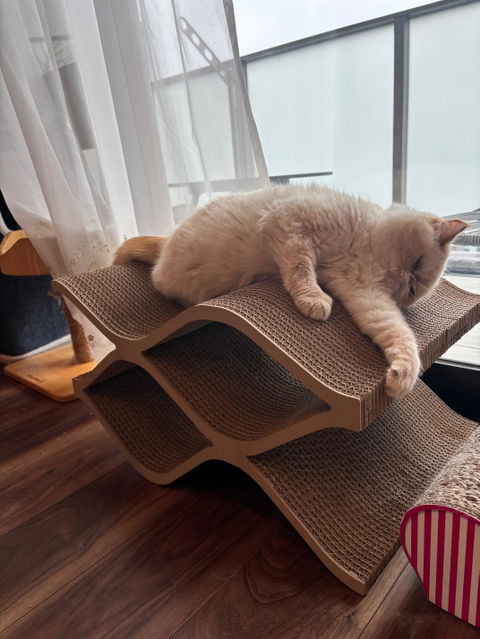
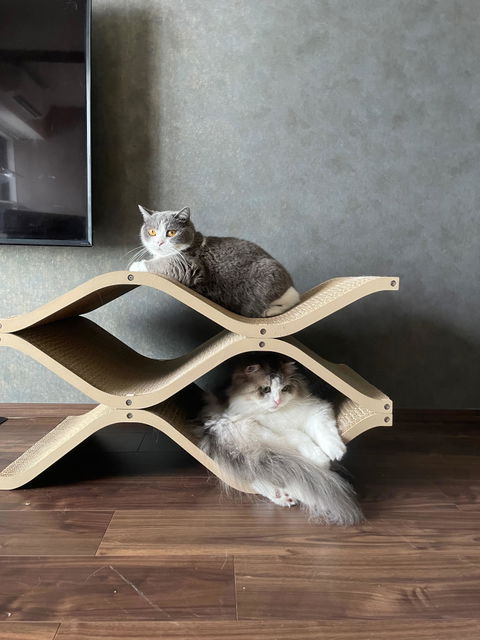
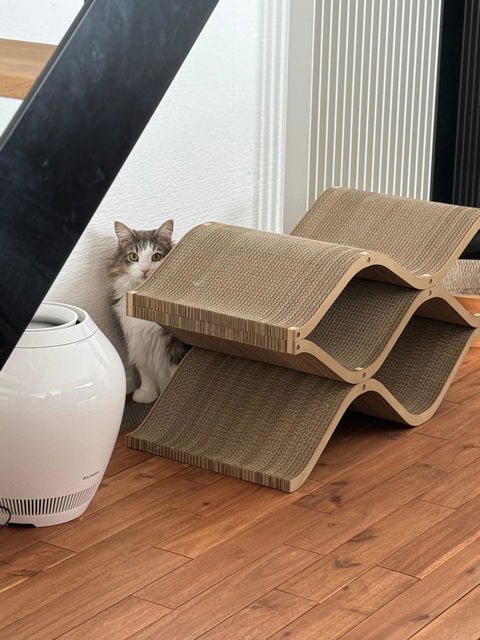
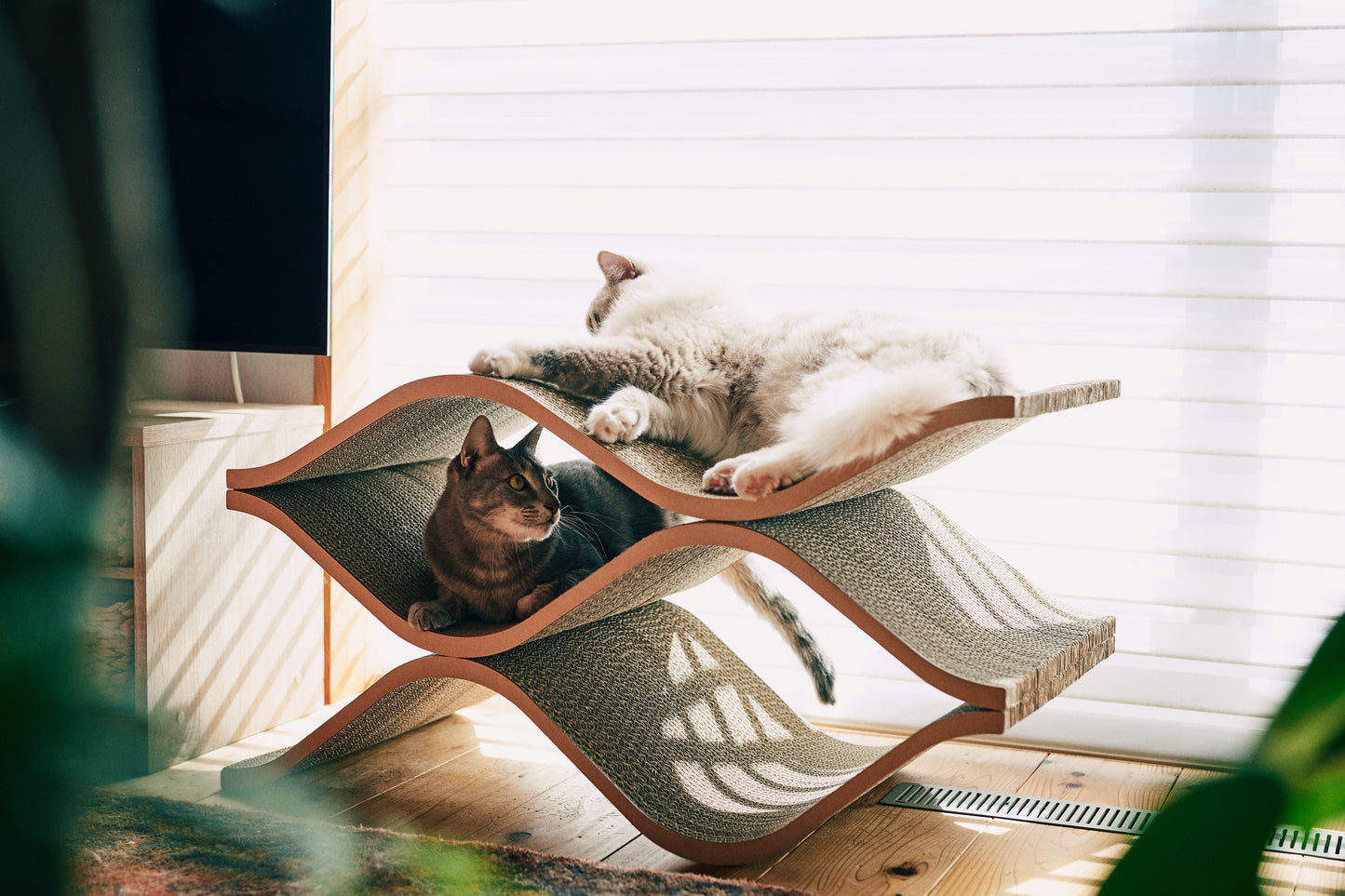
Equally important as how cats play is the presence of a secure space. The research states that providing hiding spots and observation spots from which cats can survey their surroundings from a high vantage point is effective in reducing scratching behavior. Stressed cats need a place where they can escape stimulation and calm down. Whether there is a place nearby where they can easily settle after playing. This itself seems to be one of the environmental factors that can regulate a cat's condition.
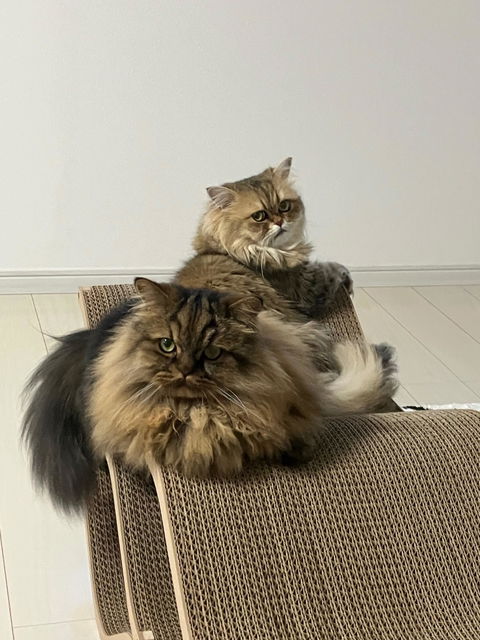
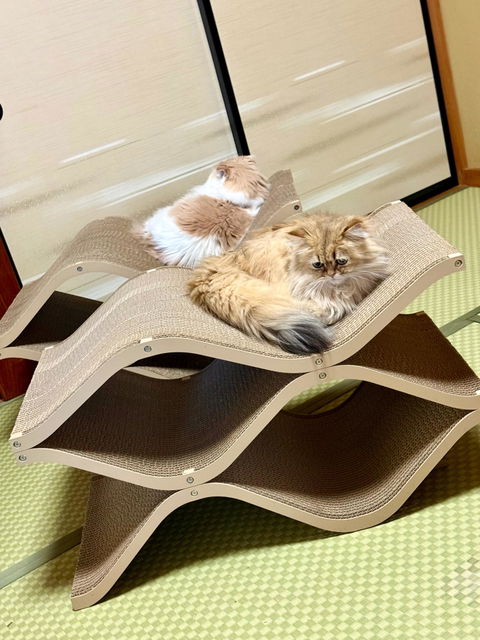
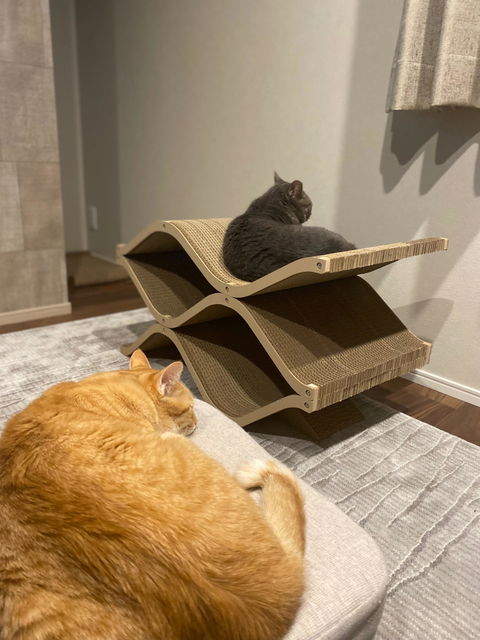
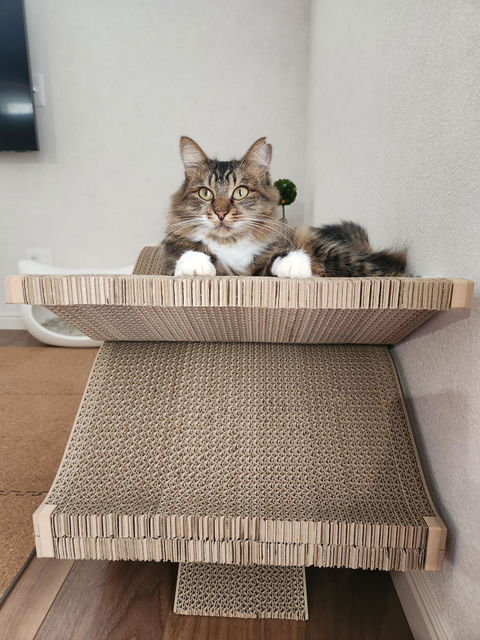
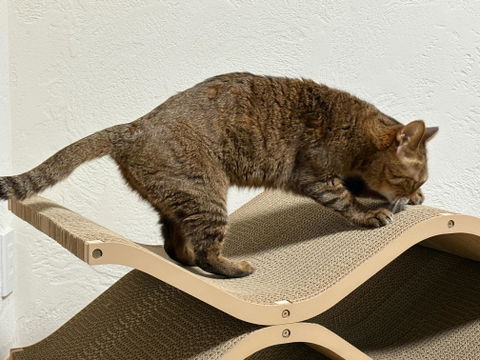
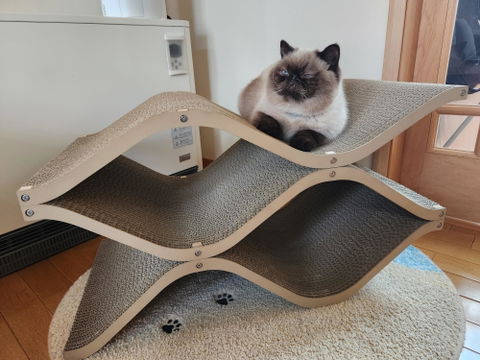
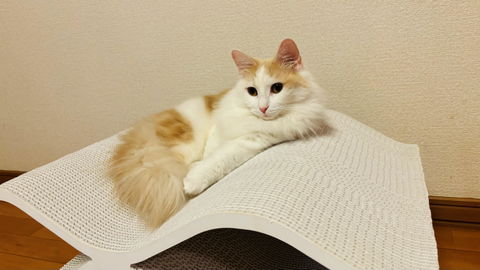
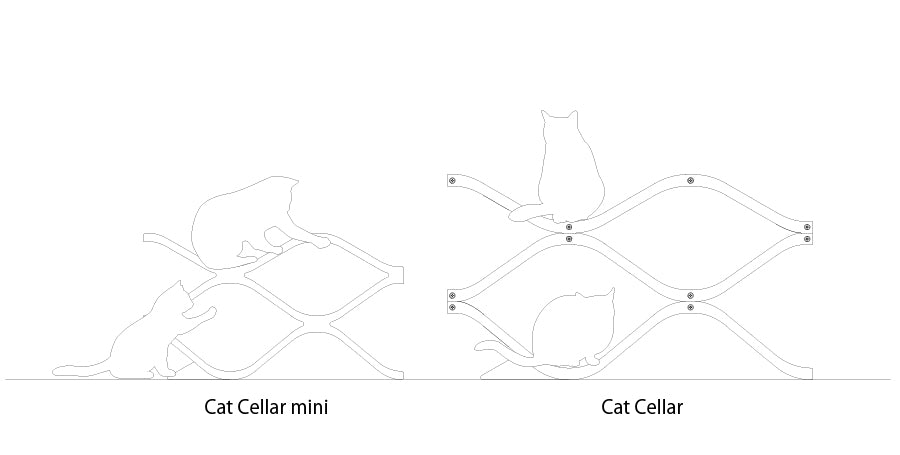
The Cat Cellar is designed to combine a scratching post function with a "hole" where cats can hide and a "high place" where they can perch to look around the room. Having a place nearby where they can naturally relax after playing. Creating this situation might be the foundation for a peaceful daily life for both the cat and the home. The desire to "play with them more" is a valuable expression of love for your cat. However, by being mindful of the quality of play and whether there is a safe place to rest after playing, as suggested by the research, you might see a change in your cat's behavior.

If you have any questions regarding how to use it, please feel free to send us a message via our official LINE account. Our customer service staff will answer your questions.
※Reference: Demirbas YS, Pereira JS, De Jaeger X, et al. Evaluating undesired scratching in domestic cats: a multifactorial approach to understand risk factors. Frontiers in Veterinary Science, 2024. DOI: 10.3389/fvets.2024.1403068







![[10%off] Cat Cellar & Cat Cellar mini set](http://furnya.myshopify.com/cdn/shop/files/ChatGPT_Image_2026_7_14_10_47_09.png?v=1784117296&width=1445)
![[10%off] Cat Cellar & Cat Cellar mini set](http://furnya.myshopify.com/cdn/shop/files/ChatGPT_Image_2026_7_22_13_58_41.png?v=1784696340&width=1445)
![[10%off] Cat Cellar & Cat Cellar mini set](http://furnya.myshopify.com/cdn/shop/files/custome.png?v=1784660252&width=1445)