

Living with a cat, you might find them in the back of a closet, inside a paper bag, or squeezed into a shelf. You call them, but they don't come out. Then, a little while later, they reappear as if nothing happened. It seems there's a reason for that behavior.

Cats find "their spot" in any room.
A 2025 study by Li and Krutasaen reported tips for designing furniture from a cat's perspective. This study, which observed three cats for three months, revealed something interesting: cats will find their favorite spot, whether the room is 5m² or 220m². They naturally separate areas for activity, eating, and resting. They are animals with a very high adaptability to space.
However, there was one condition: the presence of a "hiding place." The paper recommends a design called "Hidden design," which involves creating a cat-only resting place inside the furniture. A quiet space, slightly removed from human sight, such as a gap in the wall or inside furniture. The presence or absence of such a space, it seems, changes a cat's behavior.
What happens if there's no place to hide?
In the same study, there was a record of a cat's space suddenly being narrowed. That cat began to exhibit anxiety-related behaviors. The paper states that changes in space should be made gradually, and that by providing "safe zones" or "quiet corners" in the home where cats can feel secure, cats can gain a sense of control.
A sense of control is a somewhat unexpected phrase. But if you think about it, when a cat goes into a hiding place on its own, it's not "escaping" but "choosing a place where it can feel safe." The ability to enter and exit a hiding place at will seems to be related to a cat's mental stability.
Here, one observation caught my eye regarding the evaluation of cat furniture in a case study from the paper. Regarding tent-shaped beds, it noted, "Some cats may dislike them because they have only one entrance," and "Adding multiple entrances enhances their appeal and provides an emergency exit." Ideally, a hiding place isn't just dark and narrow. The possibility that having multiple exits, meaning not being "trapped," is also important was suggested.

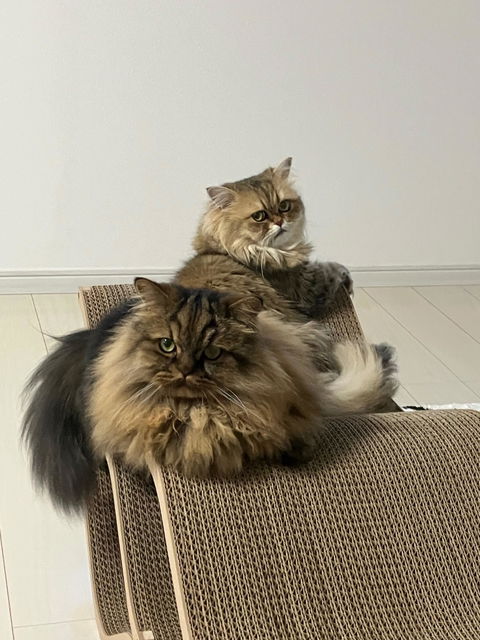
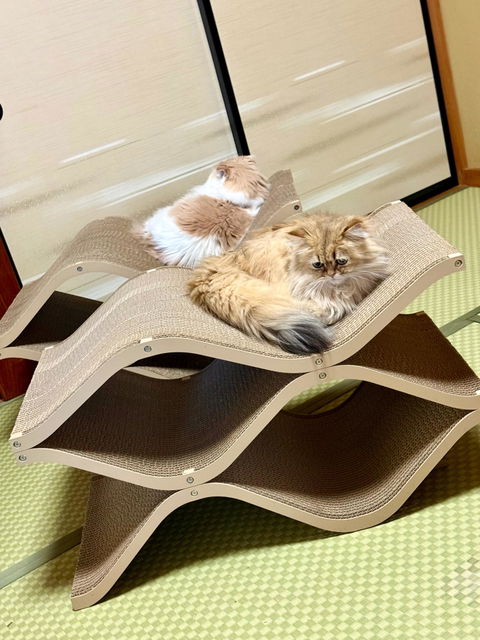
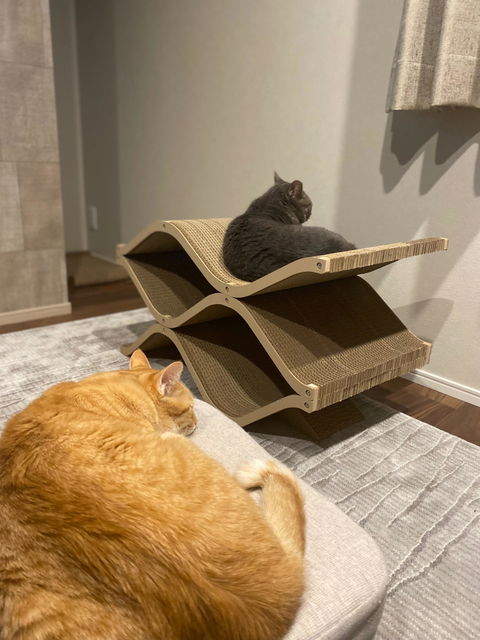
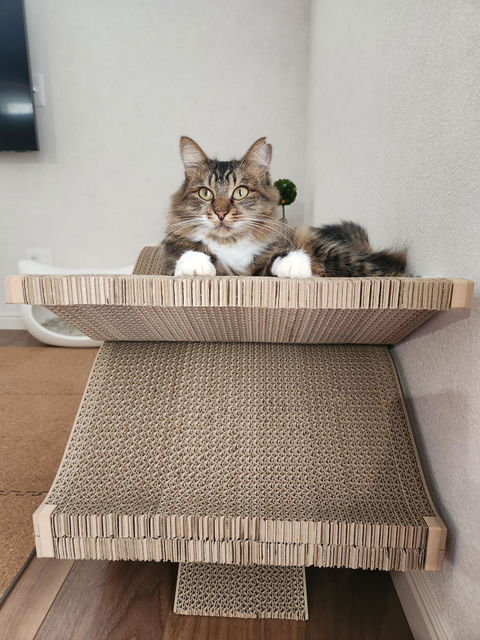
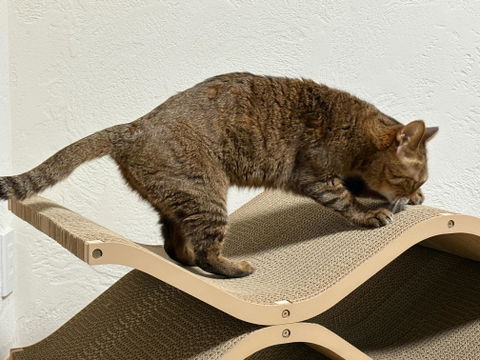
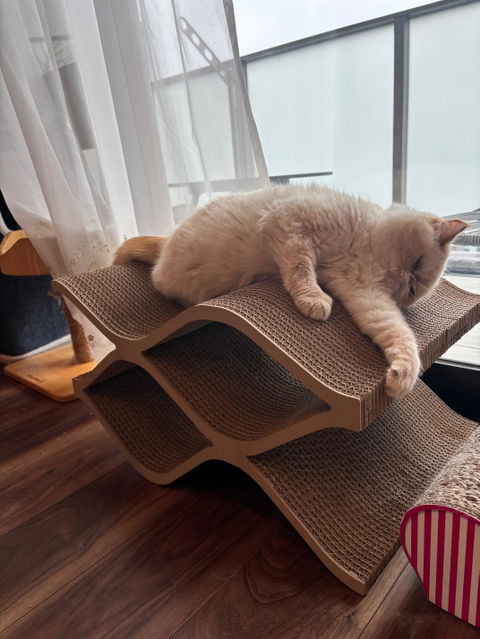
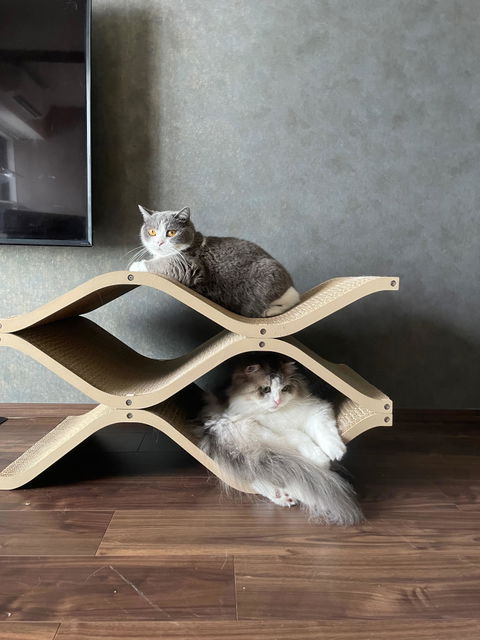
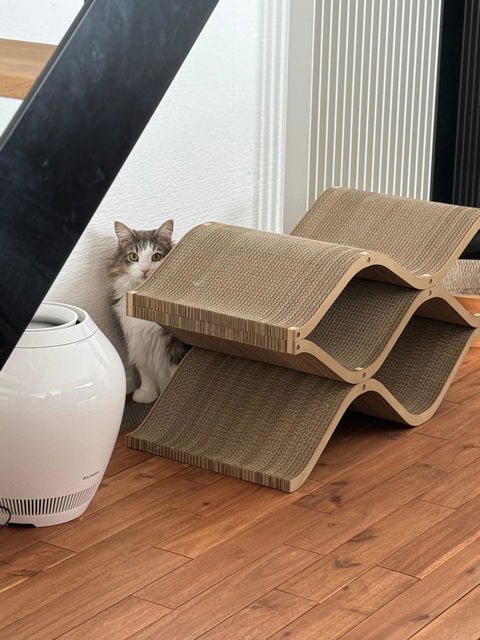
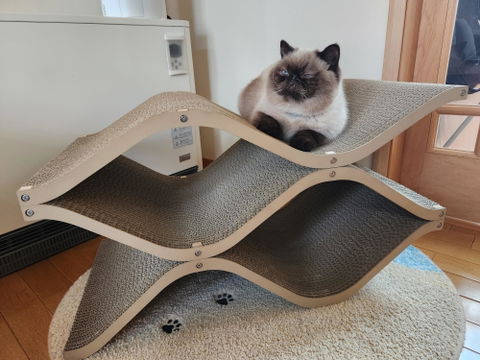
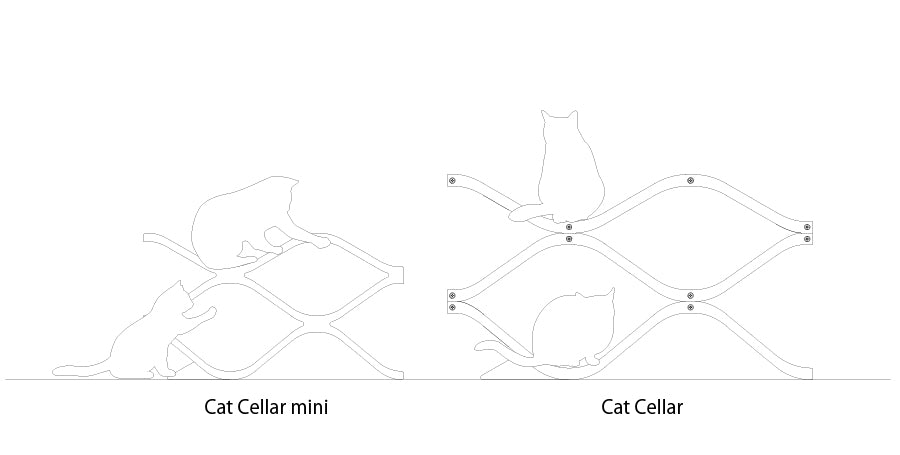
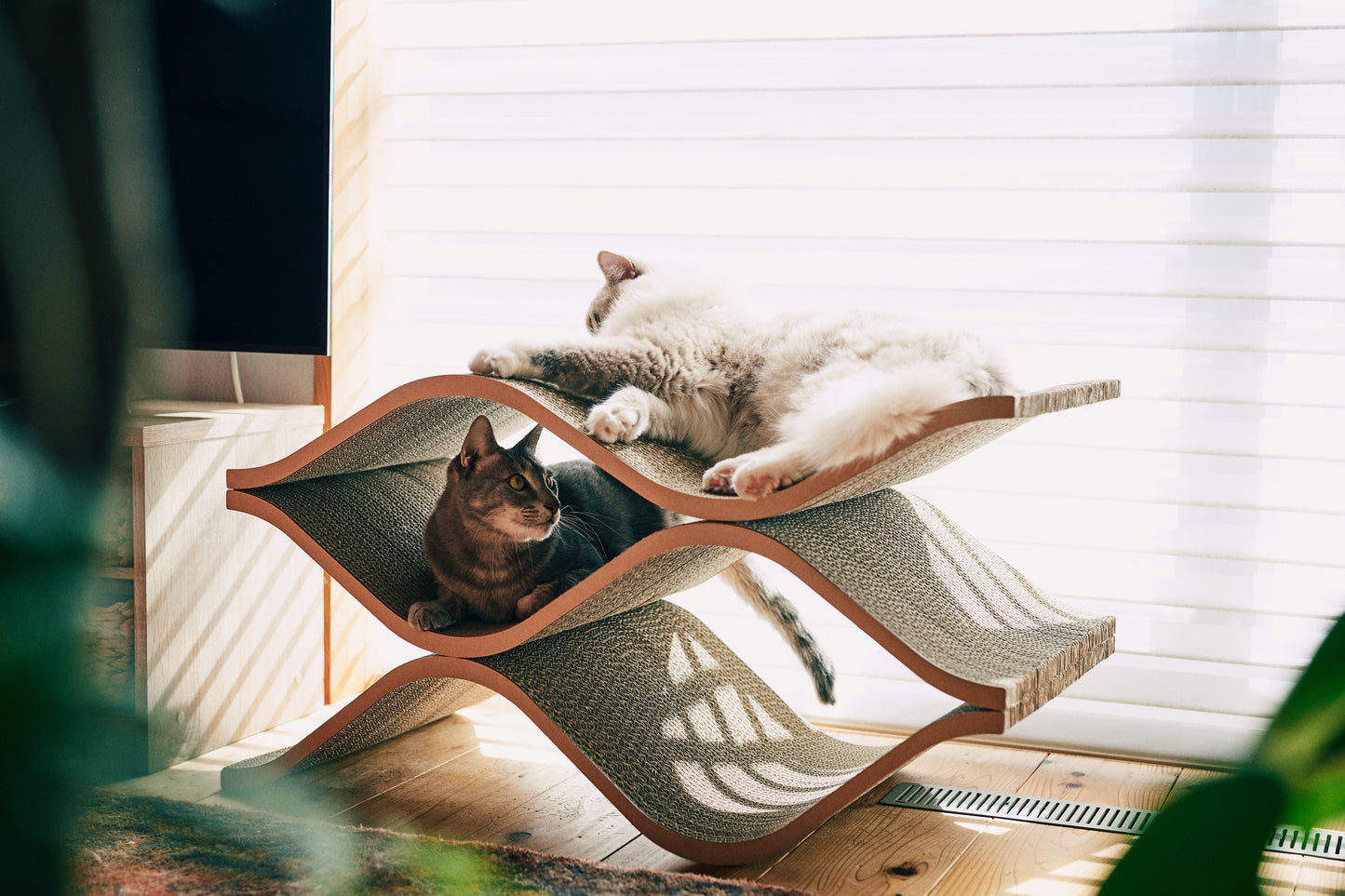
Cat Cellar has holes of various sizes. Cats can enter and exit from anywhere, so they won't be blocked by another cat. They can sense what's happening outside through the thin cardboard walls, but they are protected from view inside. This structure ultimately meets the conditions described in the paper: "a place to hide, and an escape route."

For cats, a hiding place is not a place to escape out of fear, but a place they choose to feel safe. Reading this paper reaffirmed that for me. When choosing furniture for your cat, paying a little attention to "can they hide" and "can they freely leave from there" might give you hints for creating a comfortable space for your cat.
If you have any questions about how to use it, please feel free to send us a message via our official LINE. Our customer service staff will answer your questions.
※Reference: Li L, Krutasaen W. Home Product Design from the Perspective of Cats: Innovative Case Study Based on Limited Space. International Journal of Sociologies and Anthropologies Science Reviews, 2025, 5(4), 149-162. DOI: 10.60027/ijsasr.2025.6249







![[10%off] Cat Cellar & Cat Cellar mini set](http://furnya.myshopify.com/cdn/shop/files/ChatGPT_Image_2026_7_14_10_47_09.png?v=1784117296&width=1445)
![[10%off] Cat Cellar & Cat Cellar mini set](http://furnya.myshopify.com/cdn/shop/files/ChatGPT_Image_2026_7_22_13_58_41.png?v=1784696340&width=1445)
![[10%off] Cat Cellar & Cat Cellar mini set](http://furnya.myshopify.com/cdn/shop/files/custome.png?v=1784660252&width=1445)