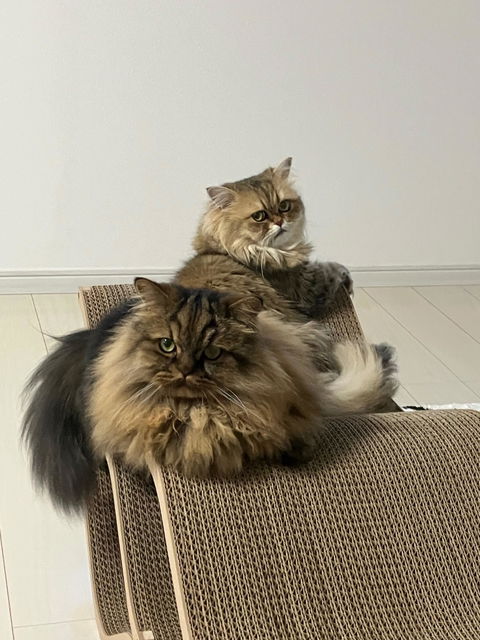
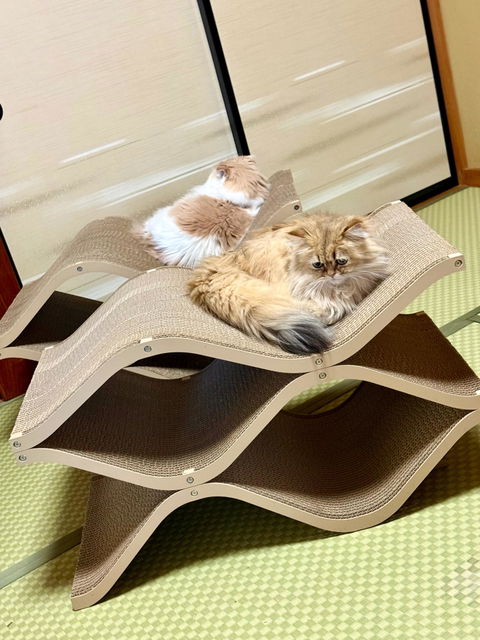
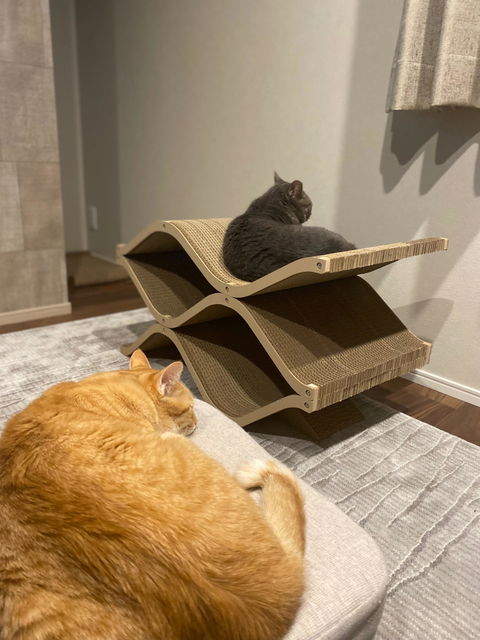
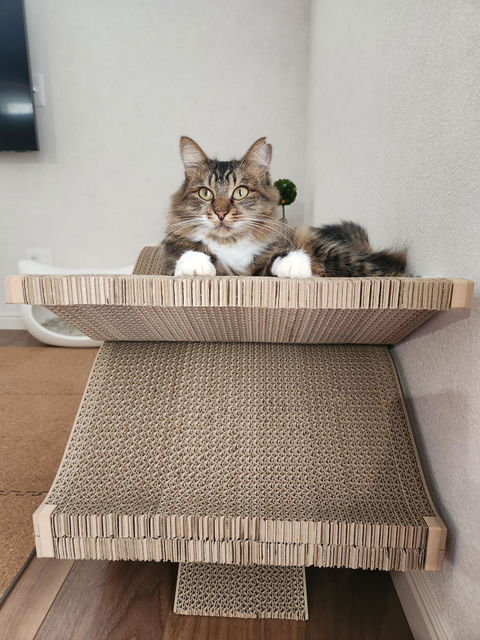
Even in a spacious living room, cats sometimes hide behind furniture or in bookshelves. This isn't a personality quirk, but rather a slight mismatch between the instincts of felines and the modern living spaces we inhabit.

When you're relaxing on the sofa and look for your cat, you might find them behind appliances, in the gaps of a bookshelf, or deep inside a closet. Even if you provide soft cushions or a prime spot by the window, they often return to a cardboard box. This isn't a cat being willful; it seems to be behavior driven by their instincts as a feline.
Among felines, only lions hunt in groups; others are generally considered "solitary hunters" who target prey alone (『Cat Aptitude Test Official Guidebook Intermediate/Advanced Edition』p.22-23). Their hunting style involves hiding in bushes or shadows, sneaking up on prey, and then, once close enough, pinning them down with their front paws and biting their neck. Unlike dogs or wolves who chase over long distances, felines typically approach while remaining hidden from start to finish.
They also have a large proportion of fast-twitch muscle fibers, known as white muscle, allowing them to reach top speeds of 50 km/h in a brief dash, but they are ill-suited for long-distance endurance running (ibid. p.24-25). They move quickly for short periods and rest for long periods. It seems that felines instinctively prefer enclosed, confined spaces with walls as places to spend their "long rest" time.

Even for domestic cats, this habit is said to remain largely unchanged. The book suggests "cats feel safer by walls than in the center of a room" (p.46-49) as a hint for home design and recommends providing an enclosed bed at a low position. It even proposes approximate dimensions for a cat box: an entrance hole of 150mm, a width of 300-400mm, and a height of 300-350mm (p.48).
In "Home Design for Living with Cats" by first-class architect Tomoko Kanemaki, unique concepts such as "blind spots" where cats can disappear and "cat rest boxes" for休憩 are introduced, not just cat walks and cat steps (Chapter 3). This is an architect's perspective, suggesting that cats need a "buffer space" — not completely enclosed, nor completely exposed (Chapter 2).
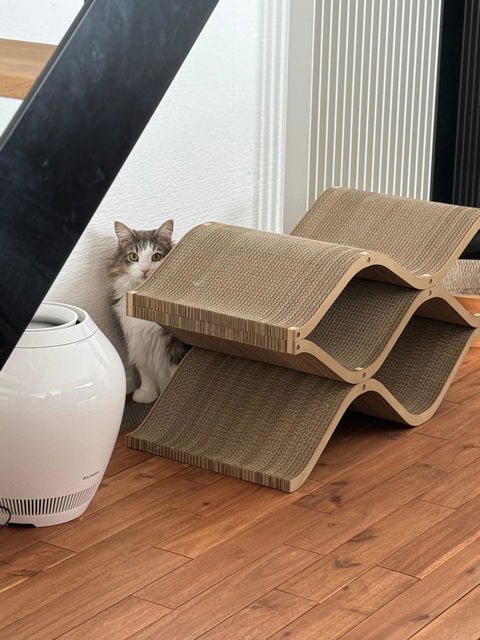
In other words, a comfortable, open living room for humans can be a somewhat unsettling space for cats. Their tendency to go behind appliances and into furniture gaps can be seen as them creating their own "buffer space."

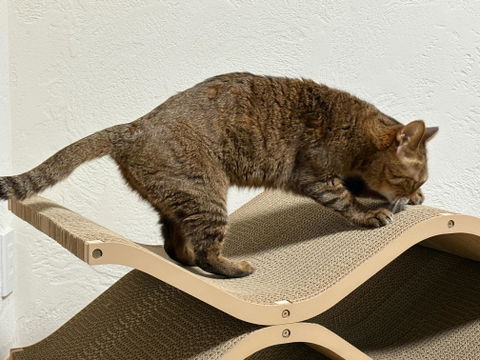
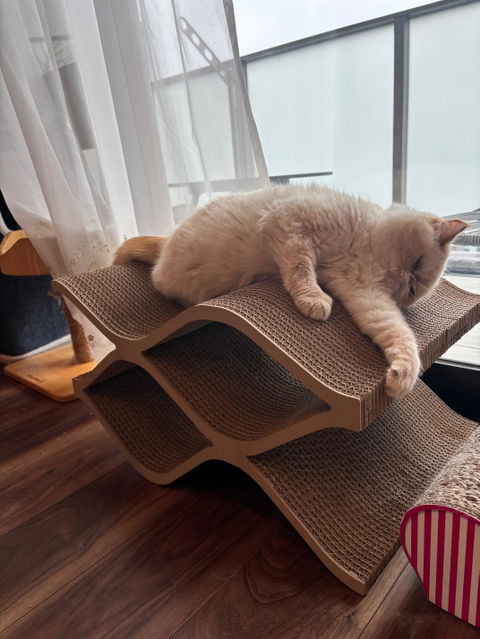
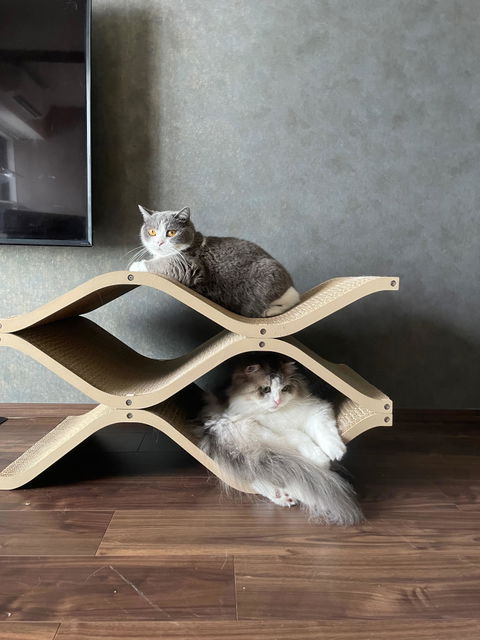
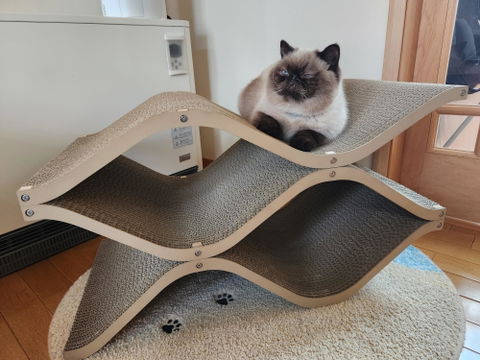
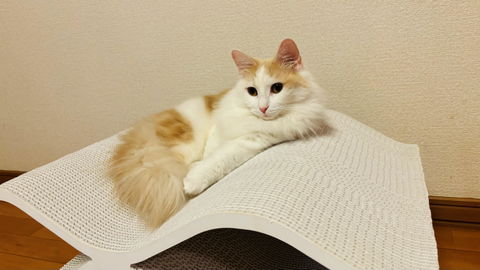
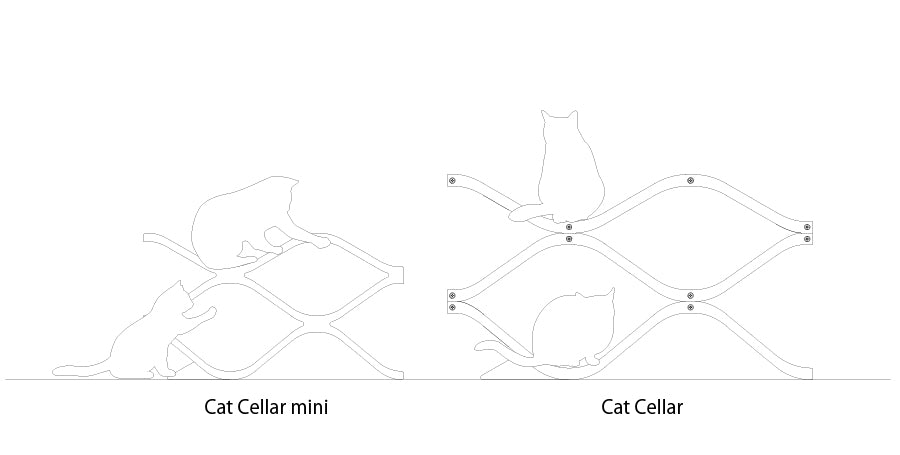
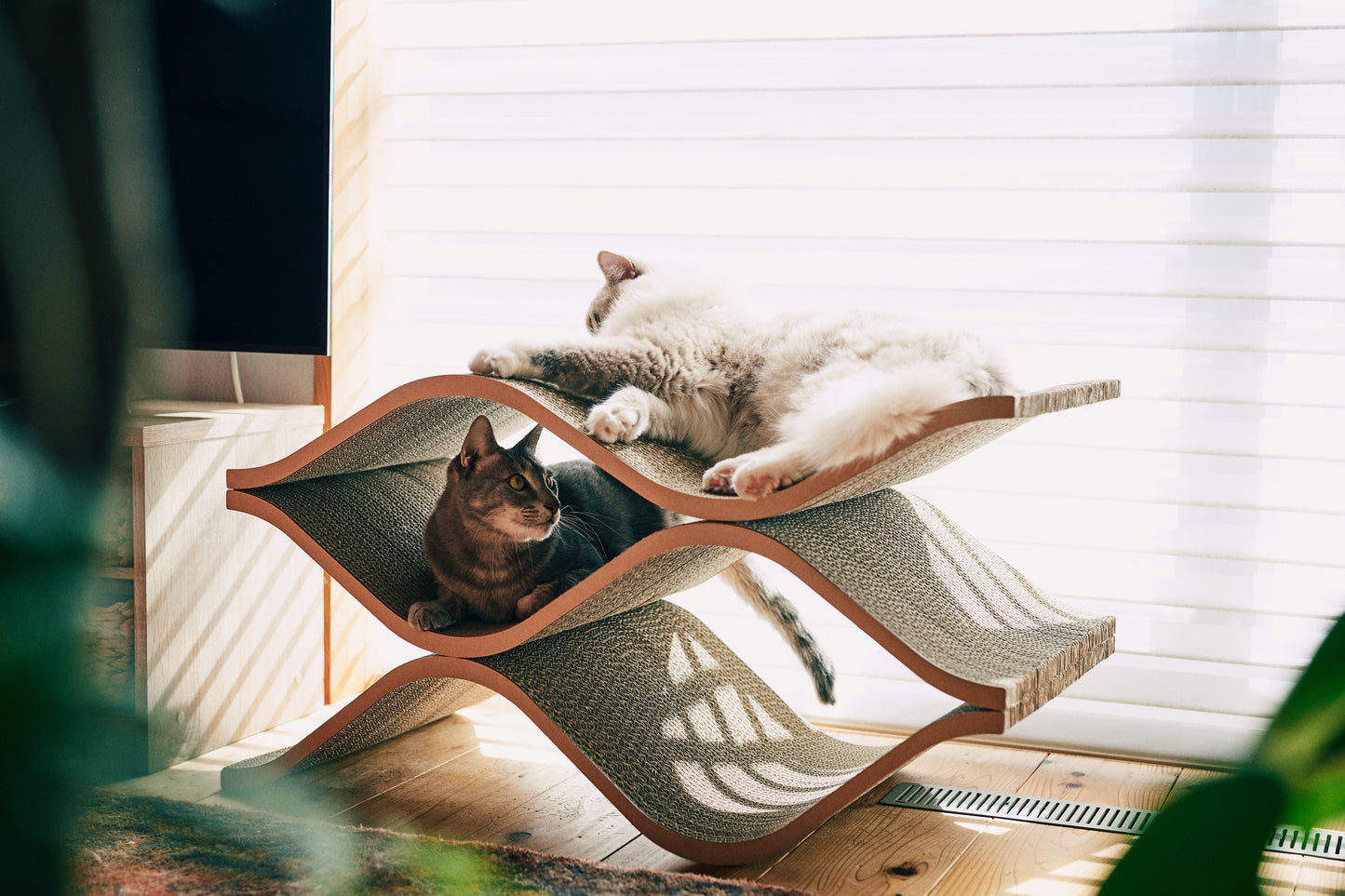
Cat Cellar is furniture specifically designed for "hiding" and "resting." It seems to blend in naturally in situations where a cat might want to "hide a little," such as for cats who find large, open living rooms unsettling, those sensitive to visitors or noises, or in homes that have experienced a move or change in family structure.
There's no need to completely redesign a large room for your cat; simply having one item that says, "This is your spot," might change how comfortable your cat feels.
If you have any questions about how to use it, please feel free to send us a message via our official LINE. Our customer service staff will be happy to assist you.
※References: 『Cat Aptitude Test Official Guidebook Intermediate/Advanced Edition (New Edition)』Supervised by Tadaaki Imaizumi, Sachi Hattori, Yaeko Takano, p.22-25, p.46-49 / Tomoko Kanemaki 『Home Design for Living with Cats』Chapters 2 & 3

![[10%off] Cat Cellar & Cat Cellar mini set](http://furnya.myshopify.com/cdn/shop/files/ChatGPT_Image_2026_8_24_15_31_55_010ef098-0a26-4fb7-98d5-51d506349356.png?v=1787553188&width=1445)