

The first few months after bringing home a kitten are said to be a very important period that determines what kind of cat they will be for the rest of their lives.

The peak socialization period for cats is said to be between 2 and 7 weeks of age, and by the time you pick up your kitten from a breeder or shelter, this period has largely passed. Many owners worry that it might be "too late" for a kitten who only arrives home at two or three months old. This is especially true if their first day involves the kitten hiding behind furniture, too scared to come out. However, recent research suggests that this isn't necessarily the case.
A paper published in 2025 by a U.S. research team (Vitale, Master & Udell, Frontiers in Ethology) compared 50 kittens aged 3 to 8 months who participated in a 6-week training and socialization class with 50 who did not. The results showed that the kittens who participated in the class maintained their discrimination learning ability—the ability to discern small differences in similar stimuli and choose appropriate responses—even after 6 weeks, whereas the ability of the non-participating kittens significantly declined. Both groups showed a slight decrease in caution when approaching unfamiliar objects and an increase in optimistic attitudes, but there was a clear difference in their "learning ability."
This, the first cognitive bias study targeting pet cats, demonstrated that even after the peak socialization period, a kitten's development can still be adequately supported through subsequent experiences, rather than being a lost cause.

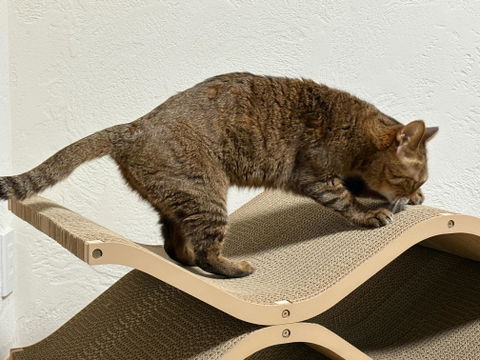
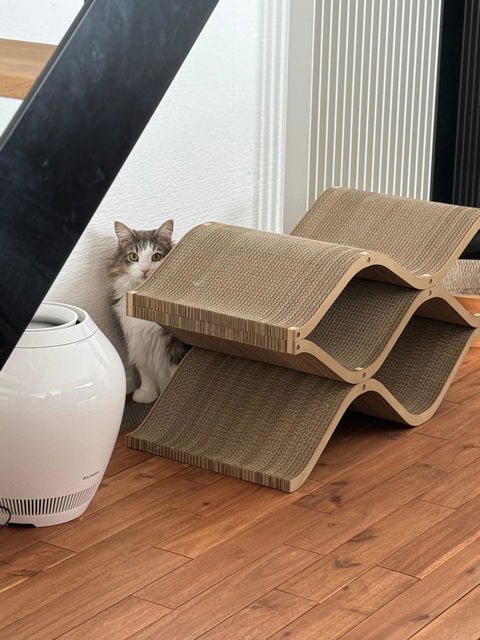
However, in Japan, there are still very few "kitten classes" like dog kindergartens. Nevertheless, what this research tells us, we believe, is not so much the effect of "attending a class" itself, but rather whether time is regularly provided for exposure to complex and predictable stimuli. Just having one place in the house where a kitten can simultaneously experience "hiding," "peeking," "climbing," and "scratching" can significantly enrich their daily life.
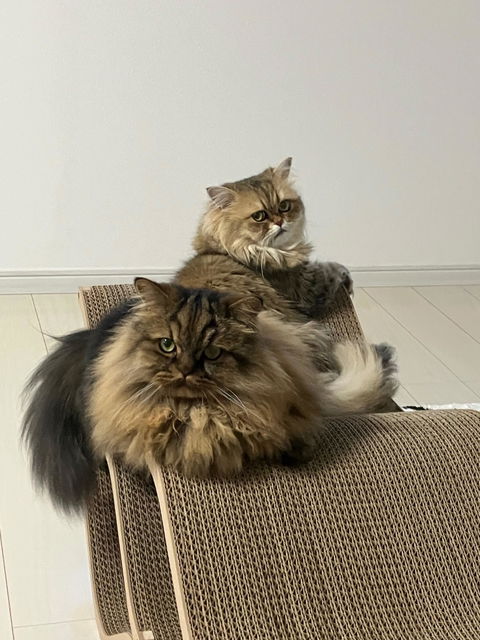
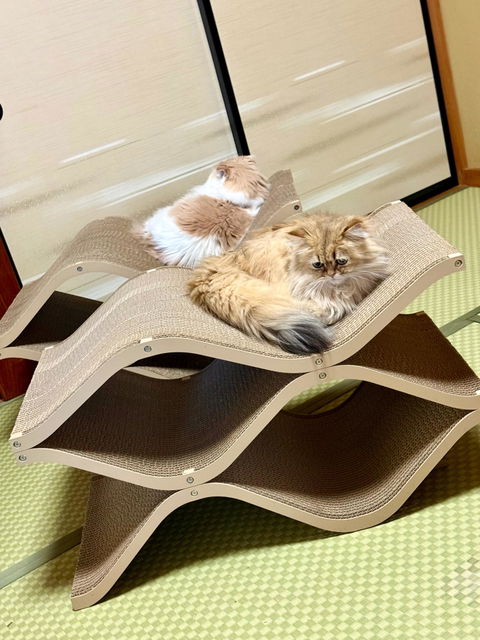
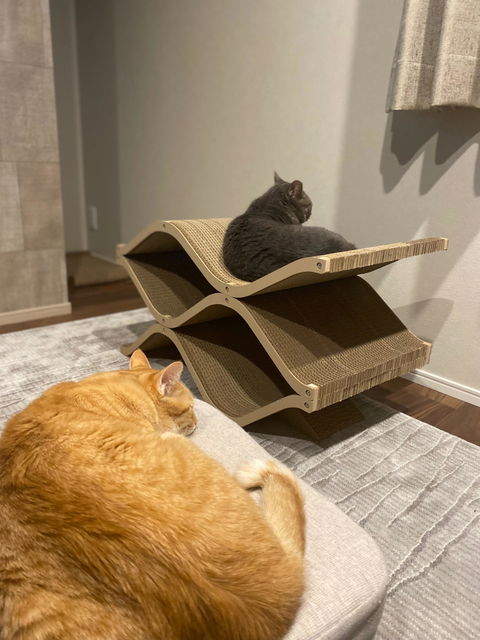
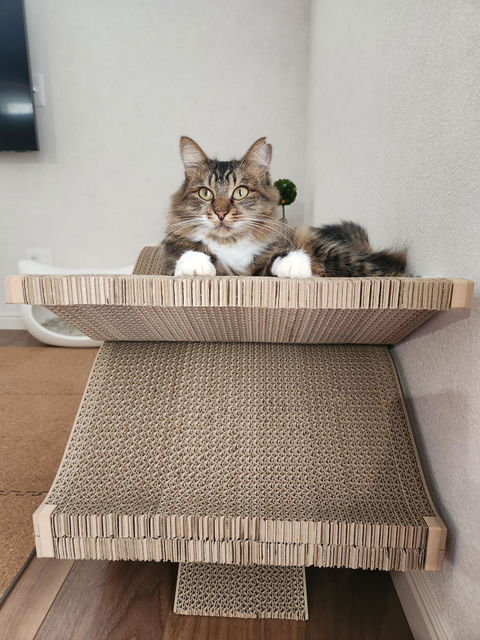
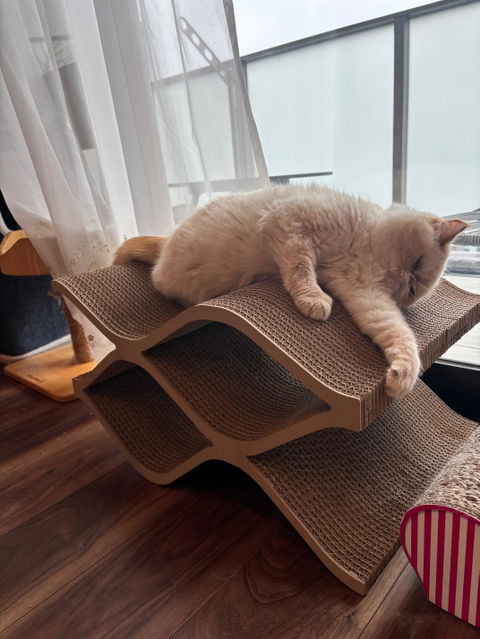
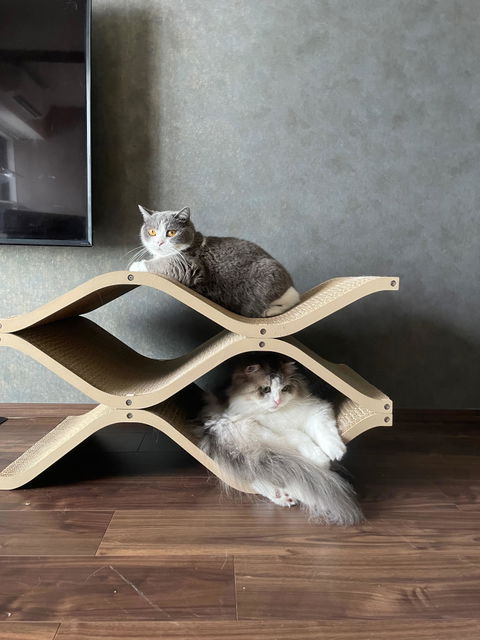
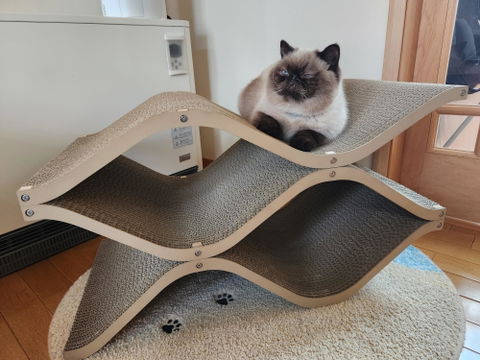
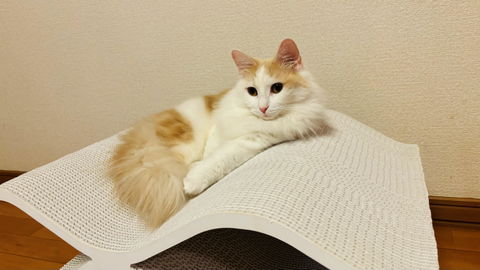
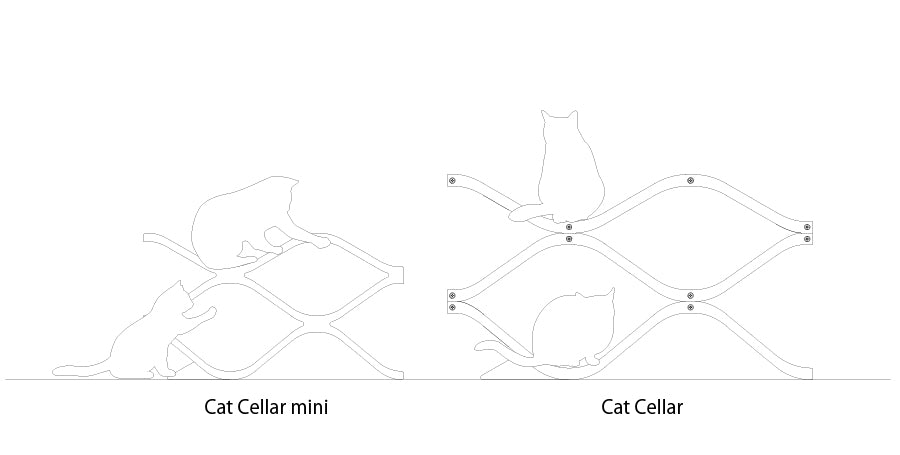
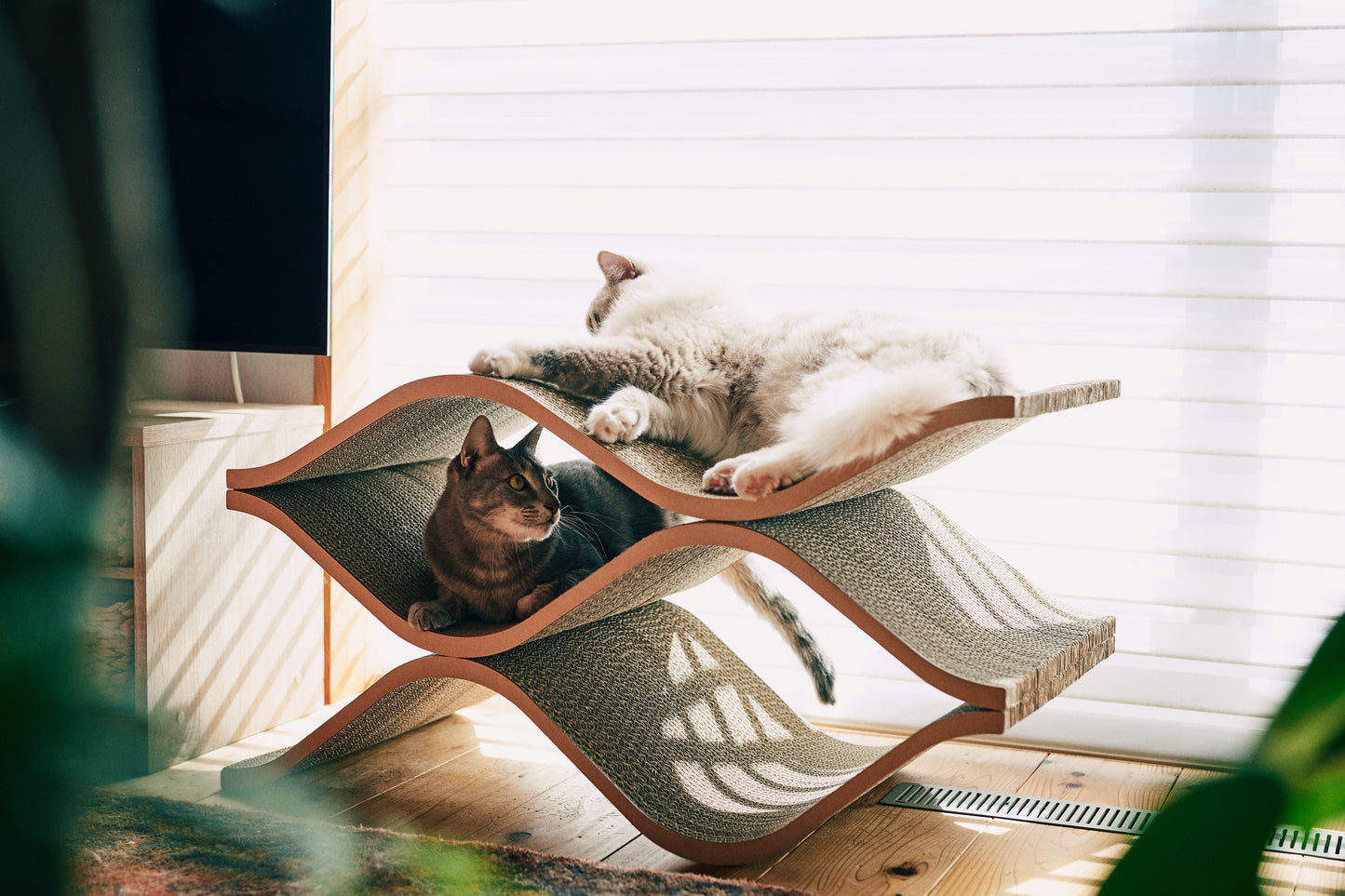
The wave structure of Cat Cellar has multiple holes and steps, allowing kittens to choose to hide, peek out, and scratch at will, without any instruction. It can be called a "self-propelled playground," so to speak, that allows owners not to rely solely on the time they can spend playing with their cat. Even on days when they are left alone for extended periods, Cat Cellar can provide a small adventure for them.

Furniture provided during the kitten stage will continue to be used by the cat as they become adults and seniors. Veterinarians sometimes point out that tall cat trees requiring jumps can become difficult for cats to climb as they age. Cat Cellar's low design and multiple entrances can start as an adventure space for kittens and remain a safe hideaway throughout their senior years. Instead of furniture that needs to be replaced as they grow, we hope it will be placed in homes with new kittens as furniture that can last a lifetime.
If you have any questions about how to use it, please feel free to send us a message via our official LINE. Our customer service staff will be happy to assist you.
*Reference: Vitale, K. R., Master, C. D., & Udell, M. A. R. (2025). The impact of kitten training and socialization classes on cat cognitive bias and discrimination learning. Frontiers in Ethology, 4. DOI: 10.3389/fetho.2025.1681085









![[10%off] Cat Cellar & Cat Cellar mini set](http://furnya.myshopify.com/cdn/shop/files/ChatGPT_Image_2026_7_14_10_47_09.png?v=1784117296&width=1445)
![[10%off] Cat Cellar & Cat Cellar mini set](http://furnya.myshopify.com/cdn/shop/files/ChatGPT_Image_2026_7_22_13_58_41.png?v=1784696340&width=1445)
![[10%off] Cat Cellar & Cat Cellar mini set](http://furnya.myshopify.com/cdn/shop/files/custome.png?v=1784660252&width=1445)
![[10%off] Cat Cellar & Cat Cellar mini set](http://furnya.myshopify.com/cdn/shop/files/a6e833342526f732049771ddbb636dc4.png?v=1787552594&width=1445)
![[10%off] Cat Cellar & Cat Cellar mini set](http://furnya.myshopify.com/cdn/shop/files/ChatGPT_Image_2026_8_24_15_27_00.png?v=1787552842&width=1445)
![[10%off] Cat Cellar & Cat Cellar mini set](http://furnya.myshopify.com/cdn/shop/files/ChatGPT_Image_2026_8_24_15_31_55_010ef098-0a26-4fb7-98d5-51d506349356.png?v=1787553188&width=1445)