

猫は、寒い日ほど箱に入りたがる。「狭い場所が好き」と片付けてしまいがちなこの行動には、もう一つ、見過ごされやすい理由があります。それは温度です。

米国国立研究評議会(NRC)の基準では、猫にとって快適な温度帯は30〜38℃とされています。人間が快適と感じる20〜25℃よりもずいぶん高い。エアコンで22℃に設定したリビングは、猫から見ればやや肌寒いことになります。海外の獣医学分野でも、多くの家庭の室温はサーモニュートラルゾーン(快適温度帯)を下回っており、猫が日常的に温度不快を感じている可能性が指摘されているようです。
寒いと感じた猫は、自分で暖を取れる場所を探し始めます。窓辺の日向、ストーブの前、布団の中、誰かの膝の上。そしてよく知られているように、ダンボール箱の中。体を丸める、いつもと違う場所で眠る。寒がっているサインは、意識して見ないと気づきにくいのです。
ダンボール箱が暖かいのには、素材の構造に理由があります。ダンボールは、波状の中芯の両側に平らな紙を貼り合わせたサンドイッチ状の構造をしていて、波の中には小さな空気の層がたくさん閉じ込められています。この空気の層が熱を通しにくい断熱材として働く。金属や石のひんやりした手触りとはまるで違うのはそのためです。そこへ猫が入ると、もう一つ別の仕組みが加わります。猫の体温そのものが箱の中に蓄えられ、やがて外気より数度高い、ごく小さな温室のような空間ができあがる。熱源はほかでもない、猫自身。暖房をつけていない部屋でも、箱の中だけはほんのり暖かい、という現象はこうして起きています。

この「小さな温室」は、温度だけでなく心理にも働くようです。オランダの動物保護施設で行われた無作為化比較試験では、新しく入所した猫のうち、隠れ箱を与えられたグループは、与えられなかったグループよりもストレススコアが約7日早く安定したと報告されています(Vinke et al., 2014)。
23匹の猫を対象に、行動観察に基づくストレス指標を比較した研究です。興味深いのは、箱があった猫のほうが、閉じこもりきりになるのではなく、むしろ早く外へ出て部屋の中を探索し始めたという点。身を包む小さな居場所があることで、安心して一歩踏み出せる。猫が箱を求めるのは、逃げるためというより、前に進むための拠点を求めている姿に近いのかもしれません。

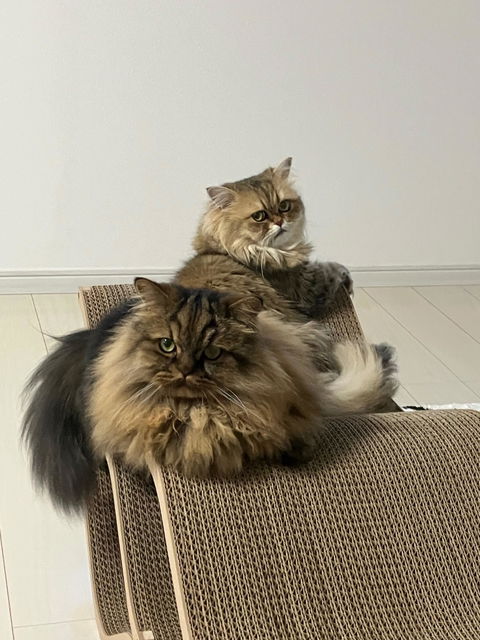
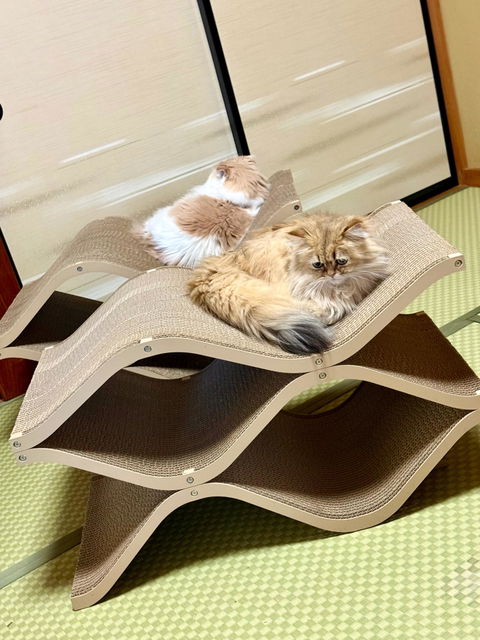
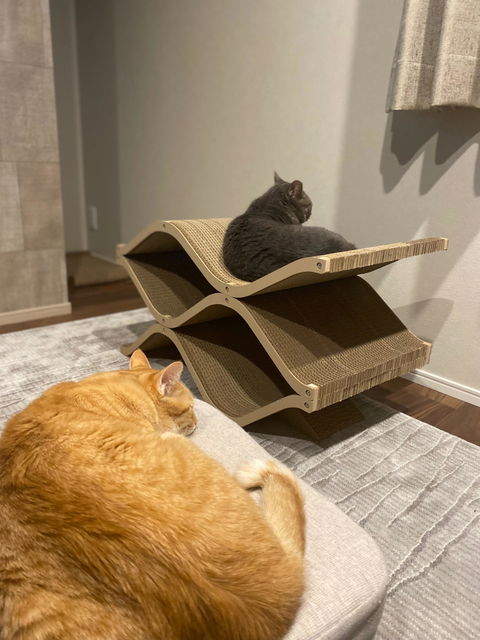
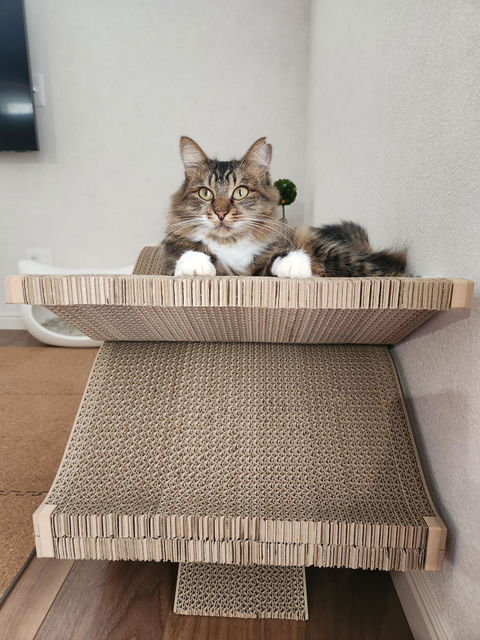
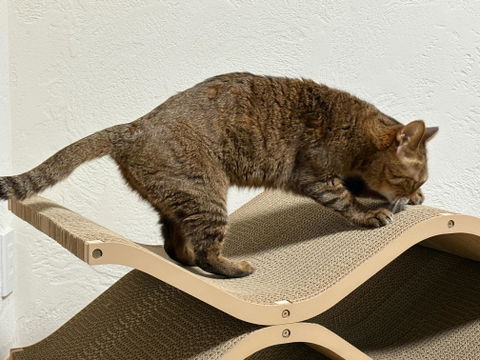
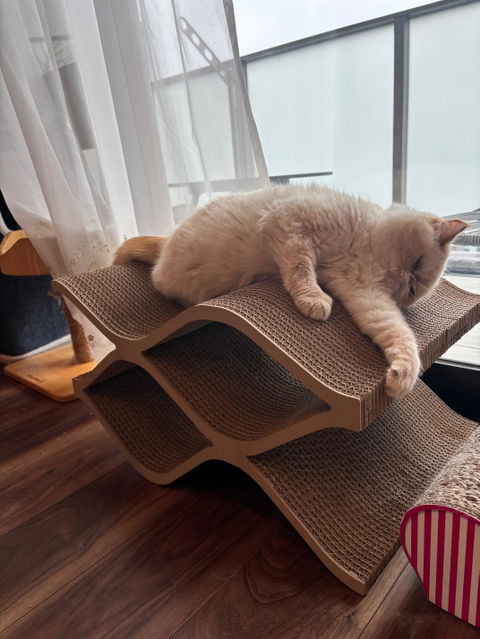
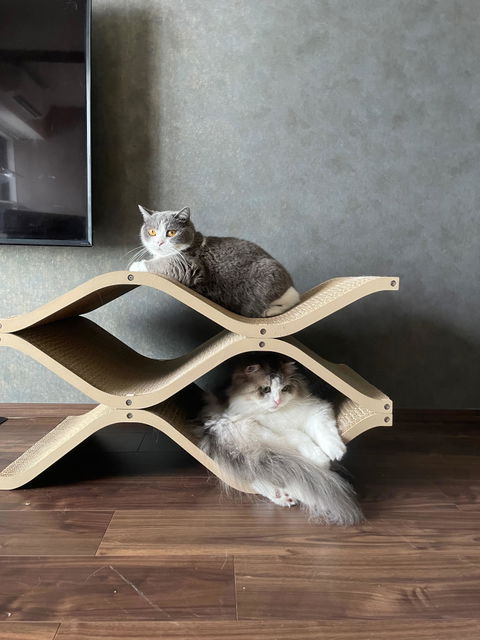
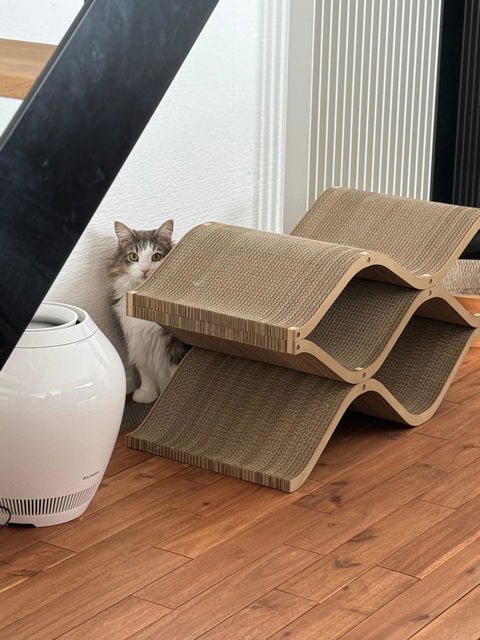
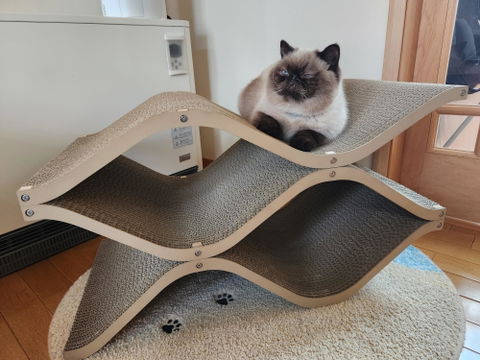
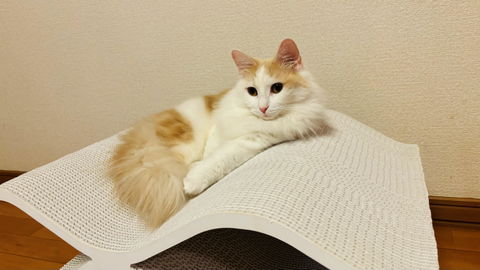
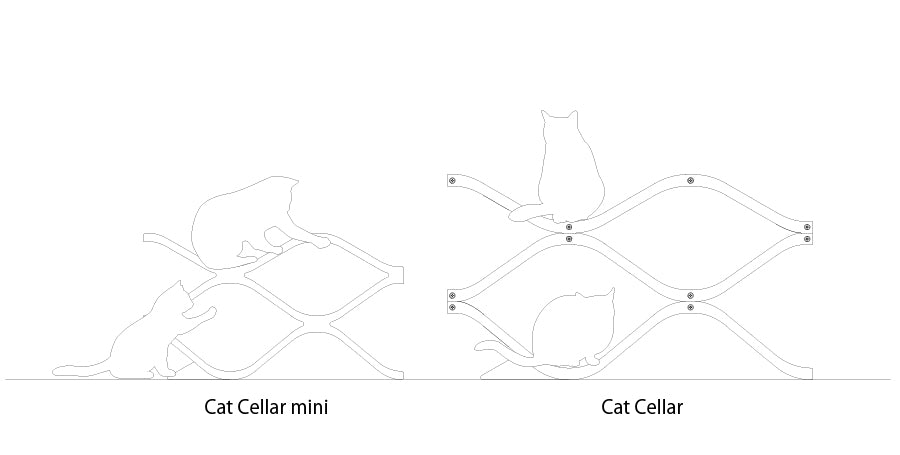
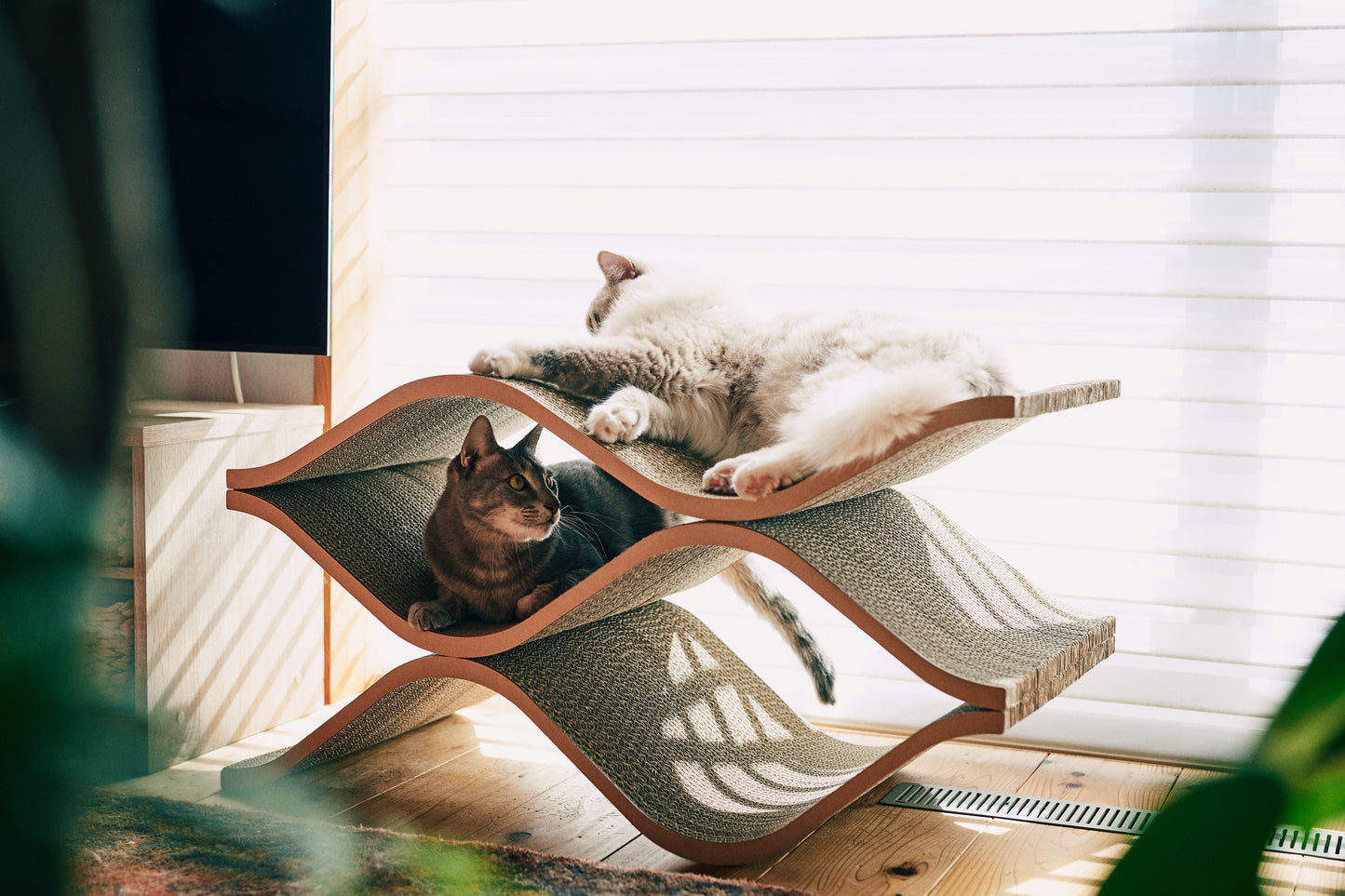
暖房をもう一段階強める前に、猫が自分で暖を取れる場所を一つ増やしてみる。室温を全体的に上げるより効率がよく、猫の側から見ても、自分で選べるほうが気楽なはずです。Cat Cellarは、素材にダンボールを選んだ意味がそのまま形になった家具のようなもの。リビングに置いても浮かない佇まいで、冬のあいだずっと、猫の小さな温室として働いてくれます。一度お迎えいただければ長く使え、爪とぎで傷んだ面は交換もできる。季節が変わっても、損のない選択肢になるかと思います。
使い方に関して質問がある方はお気軽に公式LINEからメッセージ頂けますと幸いです。お客様担当のスタッフが回答させて頂きます。
※参考:
National Research Council. Nutrient Requirements of Dogs and Cats. National Academies Press, 2006.
Vinke, C.M., Godijn, L.M., van der Leij, W.J.R. Will a hiding box provide stress reduction for shelter cats? Applied Animal Behaviour Science, 160: 86-93, 2014. DOI: 10.1016/j.applanim.2014.09.002







![[10%off] Cat Cellar & Cat Cellar mini set](http://furnya.myshopify.com/cdn/shop/files/ChatGPT_Image_2026_7_14_10_47_09.png?v=1784117296&width=1445)
![[10%off] Cat Cellar & Cat Cellar mini set](http://furnya.myshopify.com/cdn/shop/files/ChatGPT_Image_2026_7_22_13_58_41.png?v=1784696340&width=1445)
![[10%off] Cat Cellar & Cat Cellar mini set](http://furnya.myshopify.com/cdn/shop/files/custome.png?v=1784660252&width=1445)