

If you live with a cat, do you ever feel like your living room gradually transforms into "the cat's room"? You place a cat tower, a scratching post, spread out a tunnel, and before you know it, cat supplies are lined up next to the sofa. It can be quite challenging to balance your own interior design with items for your cat.
 Image generated by AI
A study published in 2021 by Junyan Ai of Nottingham Trent University in the UK revealed interesting results from a survey of cat owners. Regarding dissatisfaction with existing cat furniture, 45% of respondents said there was "little variety in design," and 40% said it "takes up too much space." On the other hand, 83% responded that they "want to place cat furniture in the living room," and 67% said they "want interactive furniture that both cats and humans can use." They want it in the living room, but there's nothing that fits the living room. Moreover, if possible, they prefer something that isn't just for the cat, but something that naturally blends into their daily life. Many cat owners seem to share this dilemma.
Cats and humans "sharing" furniture
The study also involved observations of cat-human interactions at a cat cafe in Nottingham. What emerged was the sight of cats and humans very naturally sharing the same furniture. Cats would curl up on customer chair cushions, or quietly spend time under tables. People would drink coffee nearby, watching the sleeping cats. Children would enjoy interactions like hide-and-seek with the cats, and some people would come to take photos. The author notes that nothing special was happening; they were simply in the same space, spending time on the same furniture, and that alone created a calm atmosphere.
The study also categorized the environments cats prefer based on observation: small spaces that fit their body size perfectly, holes where they can peer outside, and quiet, dimly lit places. Cats find such spots for themselves and spend long periods there. Their sleeping places are varied – beds, small boxes, cat towers, cardboard boxes – and they seem to move around depending on their mood and the time of day, rather than sticking to one fixed spot. Their tendency to want to enter cardboard boxes can be seen as an extension of this instinctual desire for an "enclosed space that fits their body."
On the other hand, owners also benefit from spending time near their cats. Several prior studies referenced in the same research reported that pet owners, in a survey of 5,700 people, tended to have lower blood pressure and cholesterol levels than non-pet owners, and that daily interaction with pets, including cats, was associated with reduced anxiety. The mere presence of a cat may be quietly benefiting the owner's life.
Based on these observations and survey results, the author actually proposes one piece of furniture. It is a multi-layered piece of furniture that incorporates a cat space within a side table, with holes on each layer, allowing cats to sleep or play on any level. The top surface can be used by the owner as a table for coffee cups or books. The design also anticipates interactions such as the cat peeking its face out when the lid is removed. It was conceived with young people (25-35 years old) living in rented accommodation as the target, and at a price point under £50. The core of this research lies in the very idea of integrating "cat furniture" and "human furniture."

Furniture proposed by the author, quoted from reference *
The option of furniture that is not "cat-exclusive"

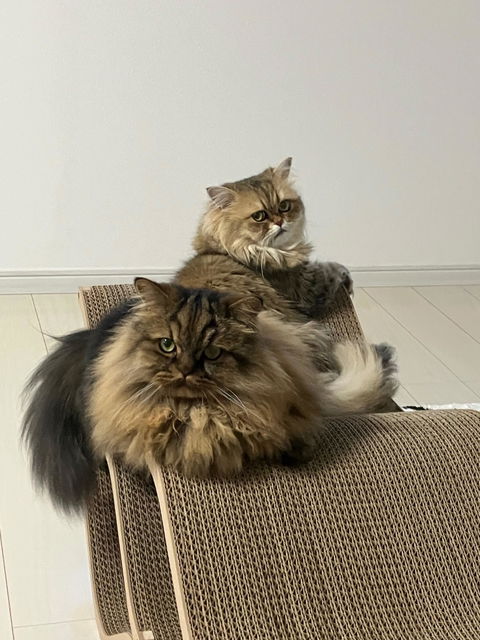
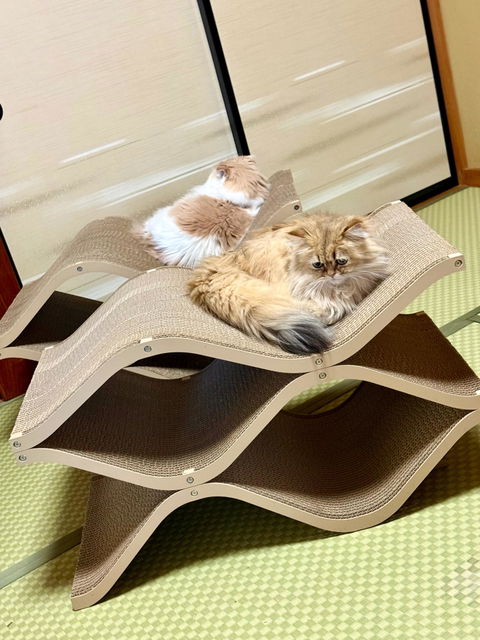
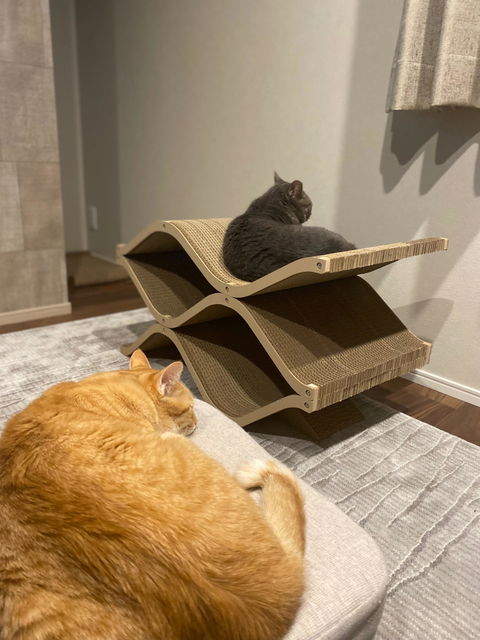
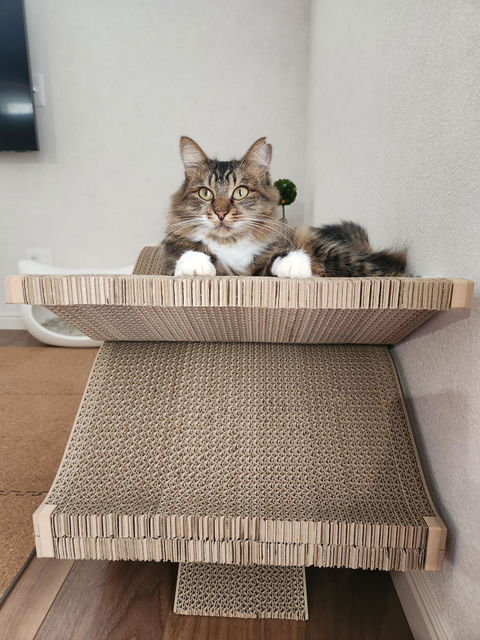
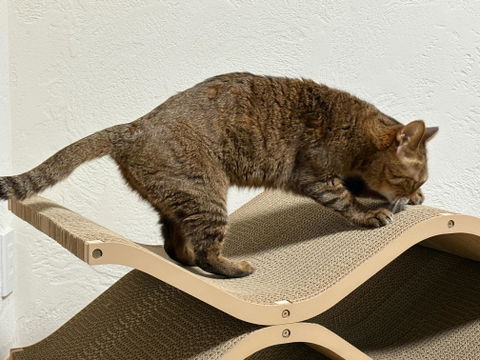
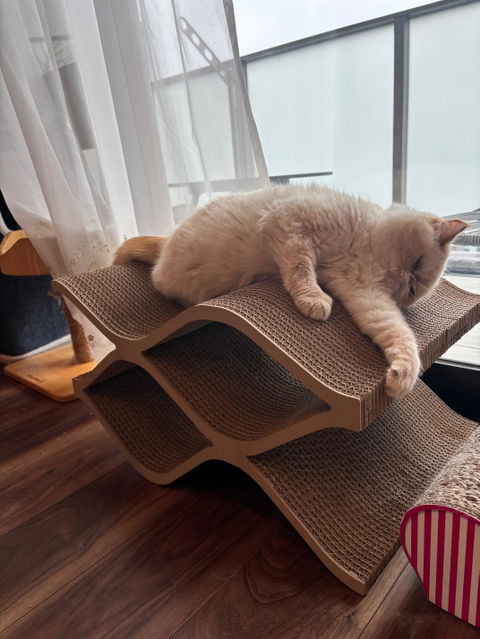
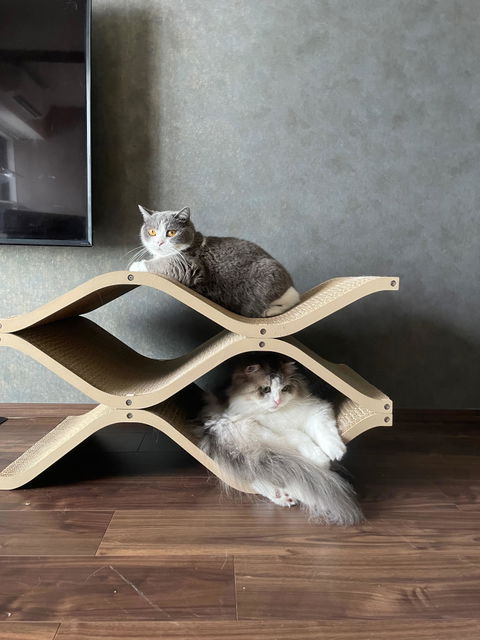
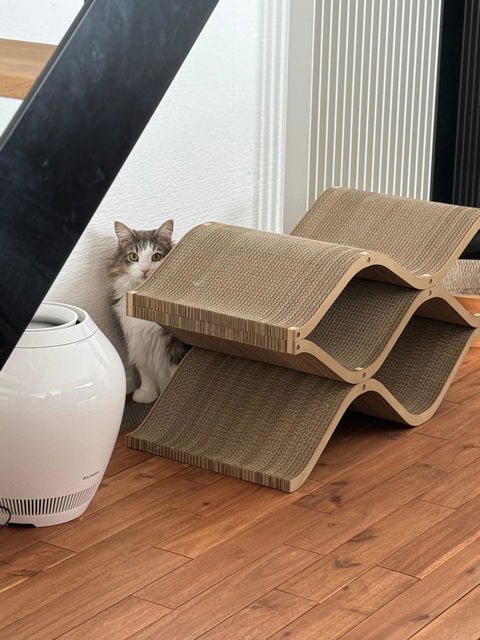
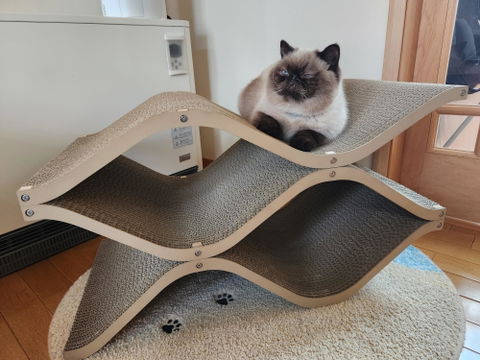
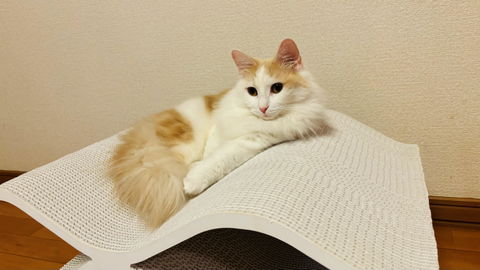
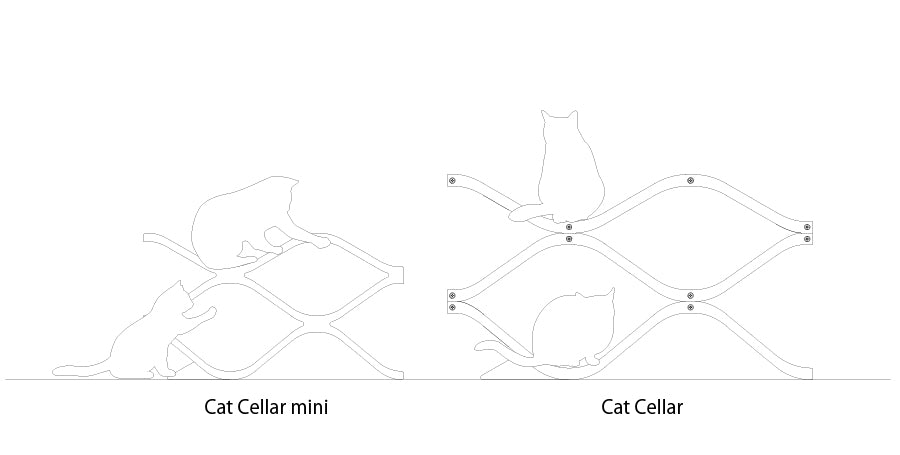
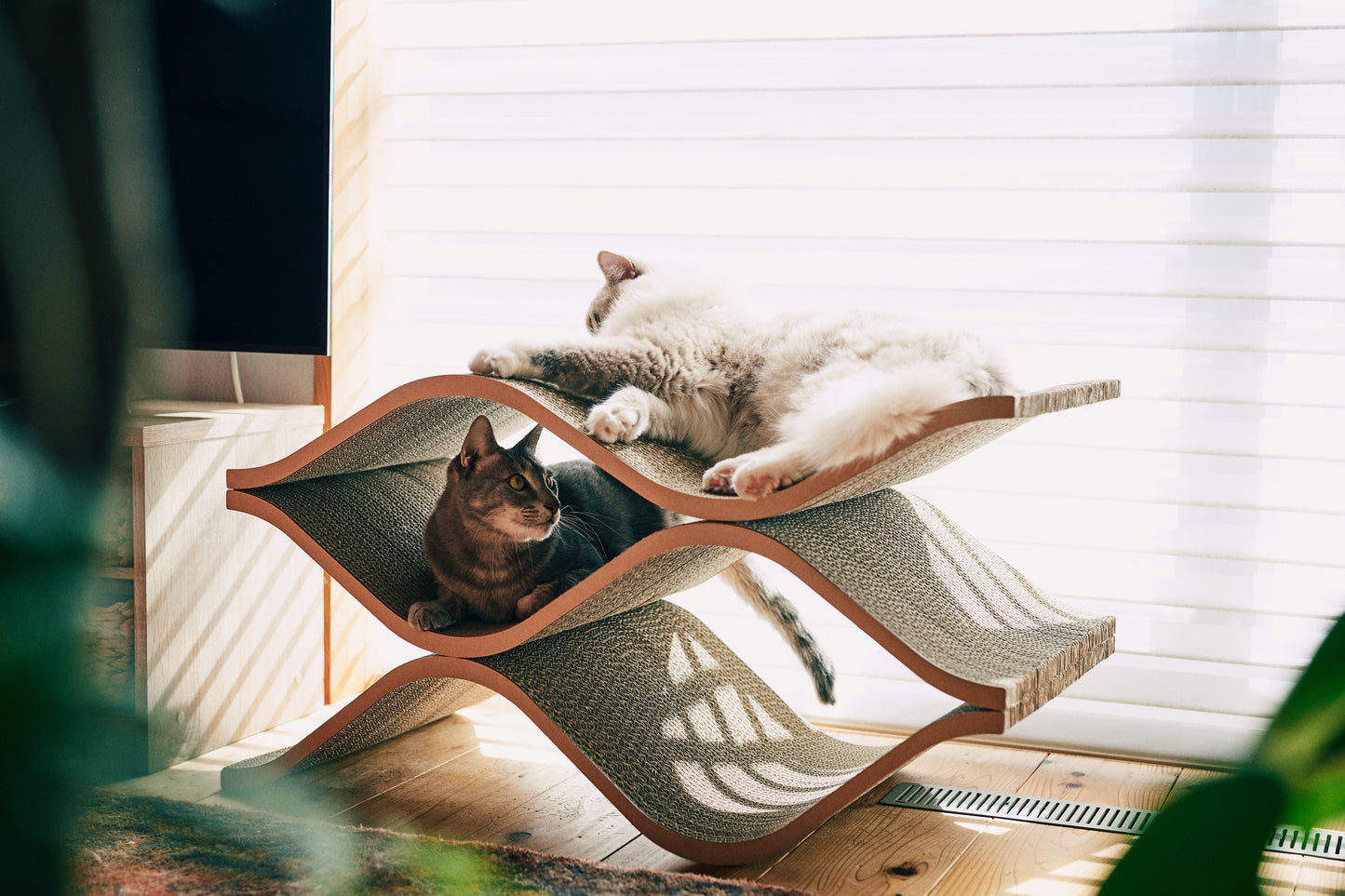
This was precisely the same question we considered when developing the Cat Cellar. Instead of thinking of cat furniture and human interior design separately, we aimed to make them a single product. The S-shaped wave structure provides a curved surface where cats can fully recline, and multiple holes allow them to observe their surroundings or peek out. The reinforced cardboard material has a texture that cats instinctively prefer and also functions as a scratching post. Yet, when placed in the living room, it looks like a piece of furniture, not just a "cat supply." We sometimes hear from owners who say, "It blends in so well with the living room that visitors didn't even realize it was for cats."
Perhaps the living room view will change slightly just by realizing that cat furniture and human furniture don't have to be separate. The Cat Cellar is a scratching post and interior piece that serves as a comfortable spot for cats while also enhancing your room's decor. If you're wondering if it would fit in your home's living room, please take a look.
If you have any questions about how to use it, please feel free to send us a message via our official LINE. Our customer service staff will be happy to assist you.
*Reference: Junyan Ai. Interactive Cat Furniture Design. Advances in Social Science, Education and Humanities Research, vol. 634, 2022.







![[10%off] Cat Cellar & Cat Cellar mini set](http://furnya.myshopify.com/cdn/shop/files/ChatGPT_Image_2026_7_14_10_47_09.png?v=1784117296&width=1445)
![[10%off] Cat Cellar & Cat Cellar mini set](http://furnya.myshopify.com/cdn/shop/files/ChatGPT_Image_2026_7_22_13_58_41.png?v=1784696340&width=1445)
![[10%off] Cat Cellar & Cat Cellar mini set](http://furnya.myshopify.com/cdn/shop/files/custome.png?v=1784660252&width=1445)