

Have you ever suddenly wondered, "My cat sleeps all day, but is that really okay?" Even if they seem to be sleeping soundly, it can be difficult to determine if their environment is truly comfortable for them.
 generated by AI
In 2013, the AAFP (American Association of Feline Practitioners) and ISFM (International Society of Feline Medicine), international academic organizations of veterinarians, published guidelines on "Five Pillars of a Healthy Feline Environment." These guidelines cover five elements: a safe space, sensory stimulation, play, positive social interaction, and a clean litter box, each considered essential for a cat's health and behavior. Among these, particular emphasis is placed on providing "places to hide" and "elevated spaces." Let's take a closer look at why these two points are so important.
Cats are animals that act only after verifying their own safety. Whether there is a place where they can instantly hide when they hear a noise or when an unfamiliar person arrives is directly linked to their sense of security. We often hear comments like, "Some cats don't use hiding places even if they have them," but even if they don't use them, having the option to "escape if necessary" seems to influence a cat's stress level. In an environment without hiding places, cats must constantly be on alert, which can lead to chronic stress.
The other "sensory stimulation" refers to the presence of materials for scratching and objects for sniffing and exploring in the environment. Ellis (2009) showed that an environment designed to naturally allow scratching, hiding behavior, and exploratory behavior is effective in preventing behavioral problems and lower urinary tract disease in cats. In other words, creating an "outlet" in the room where cats can release stress also leads to the prevention of problem behaviors. Scratching there, sniffing interesting things, climbing up high to survey their surroundings. These series of actions are "things they can do themselves" for cats, and the accumulation of these actions contributes to their satisfaction.

Multiple elements combined into one
A review study by Houser & Vitale (2022) on shelter cats confirmed that combining multiple elements, such as hide boxes, vertical space, and human interaction, improved cat welfare more than providing a single element. The idea is that even one element has an effect, but combining them creates a greater change. Applying this finding to domestic cats, it means that if there is a single item with multiple functions – "a place to hide," "a place to scratch," and "a place to rest" – cats will naturally find it easier to use that spot.
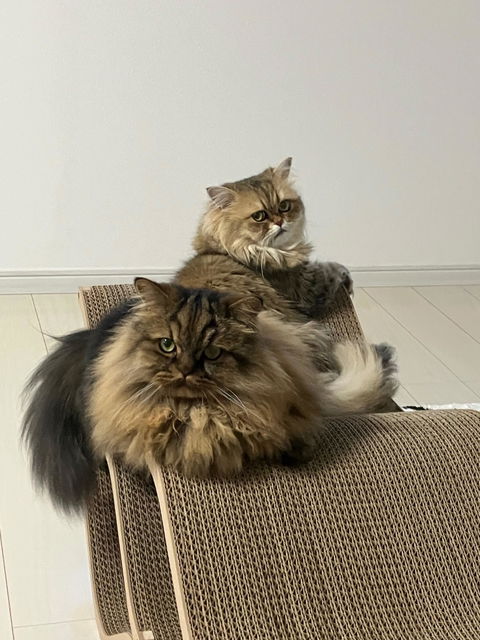
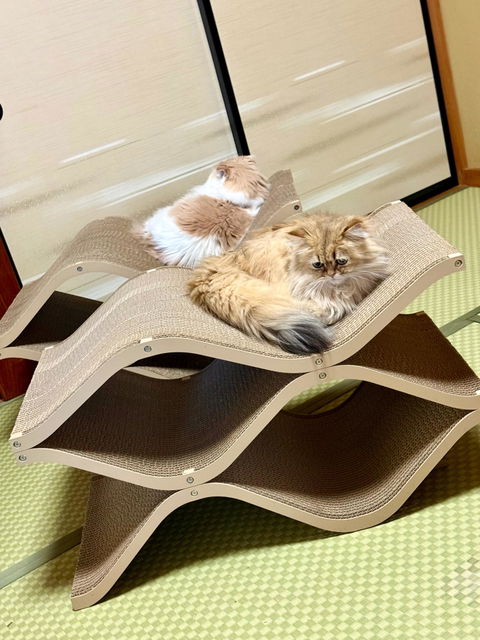
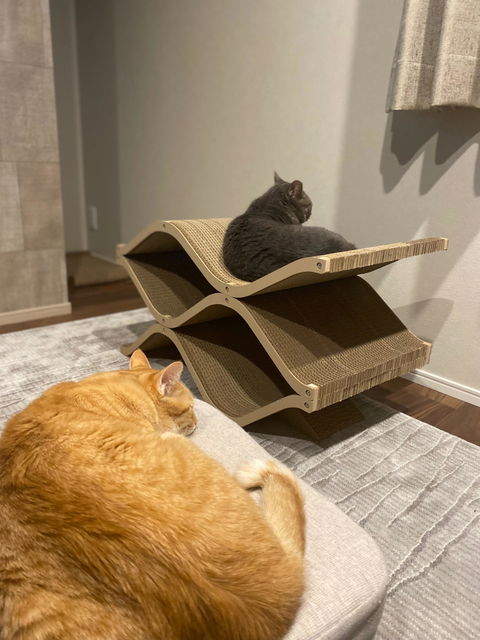
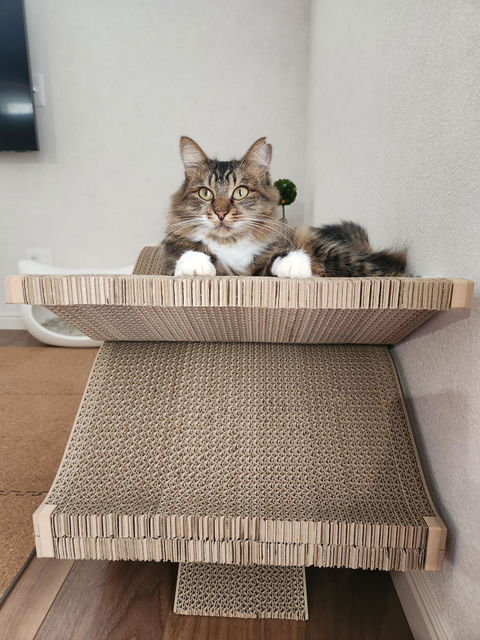
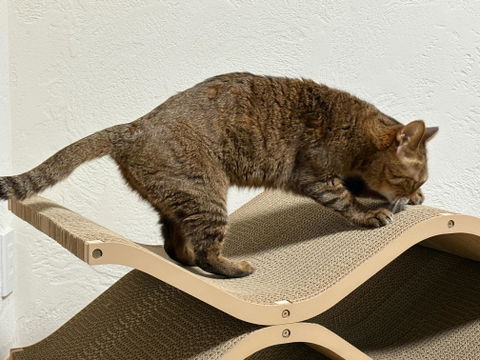
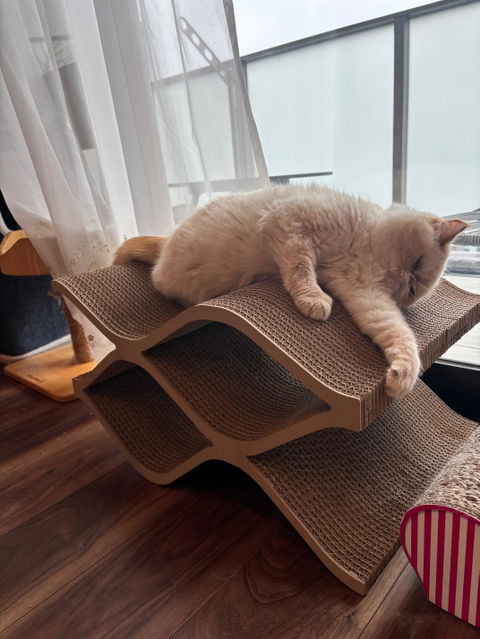
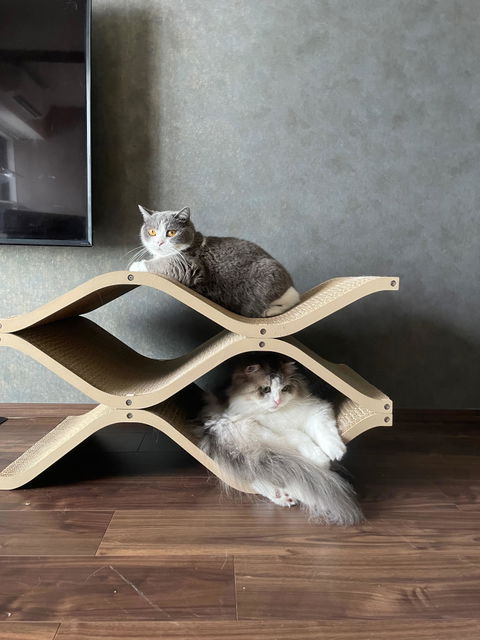
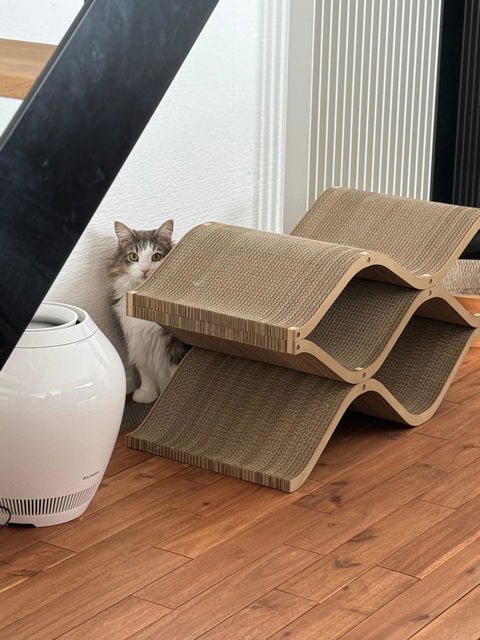
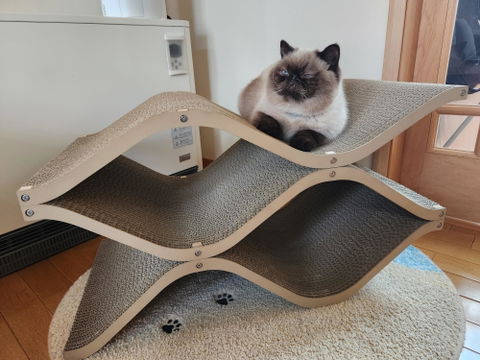
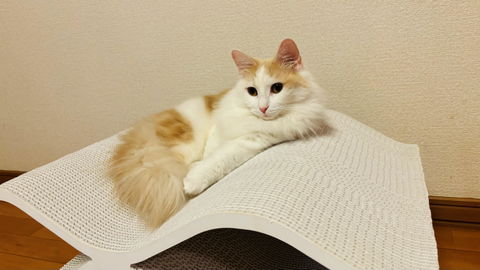
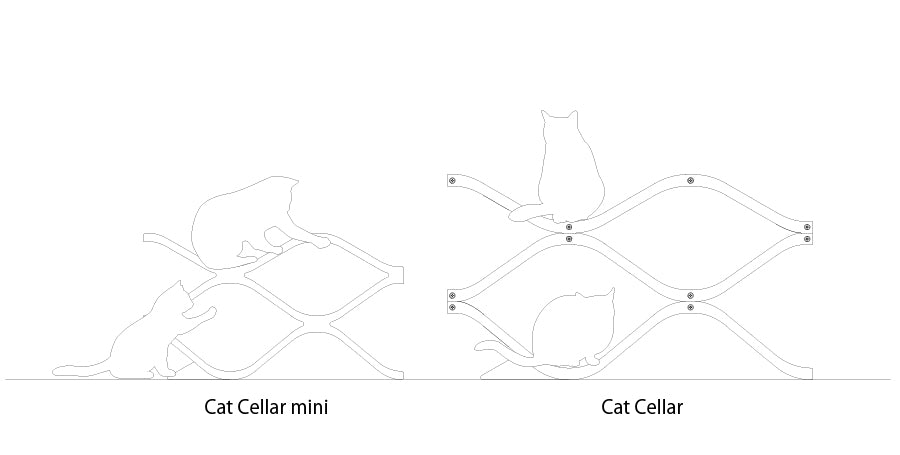
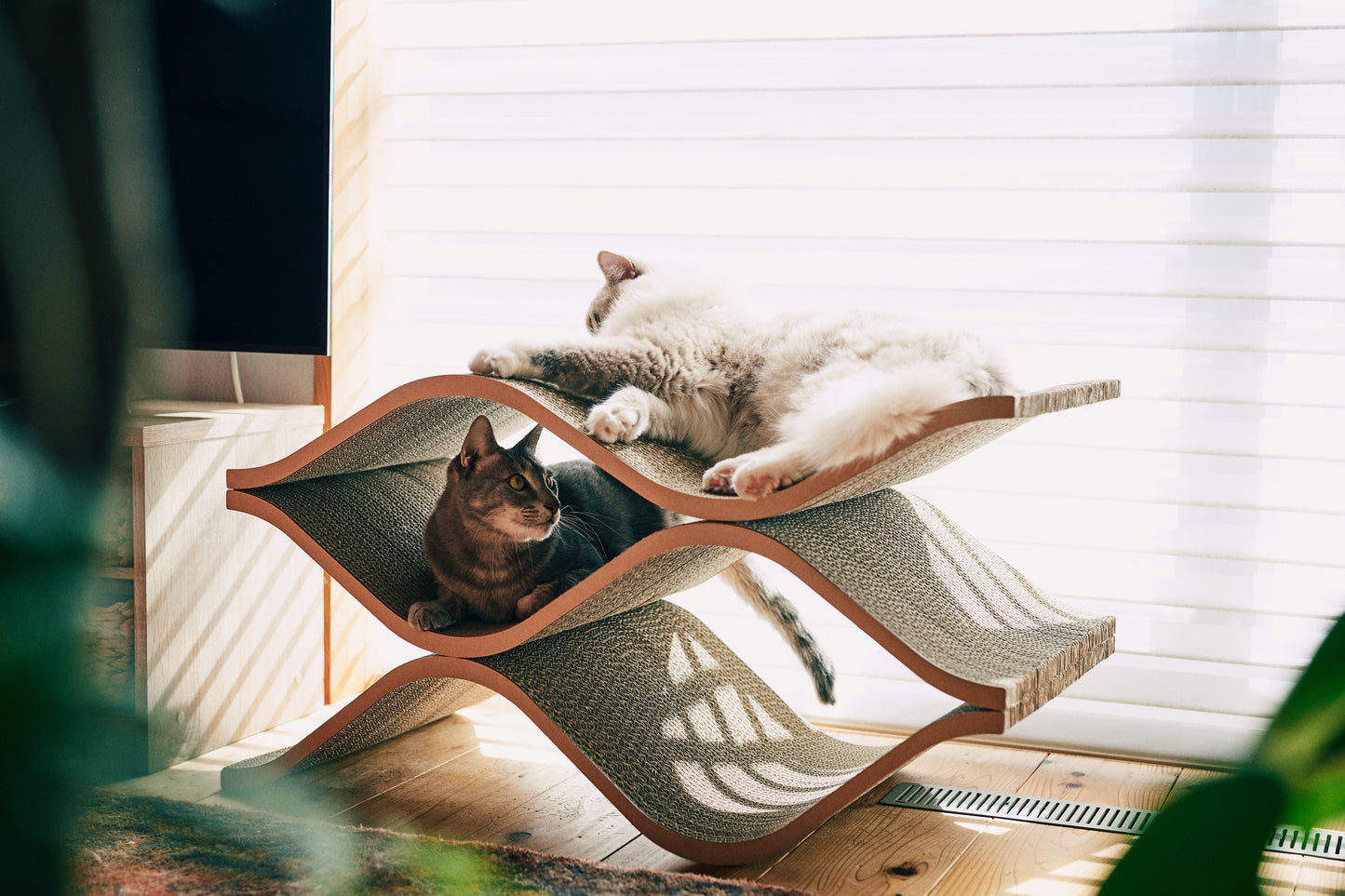
The Cat Cellar is a box-shaped structure made of cardboard, a scratching material. Cats can enter the hole to rest, climb on top to relax, or use the S-shaped indentation to scratch. We often receive comments like, "My cat was sleeping in the hole the day after I set it up," or "It's used as a scratching post and a hiding place." The underlying concept of its design is that the three points indicated by the guidelines—"a safe space," "sensory stimulation," and "an environment for exploration"—are all integrated into one form.
Even without a major home renovation, simply adding one item can change how a cat spends its time. Even if they appear to sleep in the same spot every day, whether that spot functions as "one of the available choices" can make a meaningful difference for a cat. If you feel like, "I want to do something for my cat, but I don't know where to start," I hope this provides one option for you.
If you have any questions about how to use it, please feel free to send us a message via our official LINE account. Our customer service staff will be happy to answer you.
※References: Ellis SLH. Environmental enrichment: practical strategies for improving feline welfare. Journal of Feline Medicine and Surgery, 2009. DOI: 10.1016/j.jfms.2009.09.011 / Houser B & Vitale B. Increasing shelter cat welfare through enrichment: A review. Applied Animal Behaviour Science, 2022. DOI: 10.1016/j.applanim.2022.105585 / Rodan I, et al. (AAFP/ISFM). Feline Environmental Needs Guidelines. Journal of Feline Medicine and Surgery, 2013. DOI: 10.1177/1098612x13477537







![[10%off] Cat Cellar & Cat Cellar mini set](http://furnya.myshopify.com/cdn/shop/files/ChatGPT_Image_2026_7_14_10_47_09.png?v=1784117296&width=1445)
![[10%off] Cat Cellar & Cat Cellar mini set](http://furnya.myshopify.com/cdn/shop/files/ChatGPT_Image_2026_7_22_13_58_41.png?v=1784696340&width=1445)
![[10%off] Cat Cellar & Cat Cellar mini set](http://furnya.myshopify.com/cdn/shop/files/custome.png?v=1784660252&width=1445)