

「うちの子、こんなに寝ているのに足りていないのかな」と感じることはありませんか?猫は1日の大半を眠って過ごしますが、その時間を「深く眠れているか」で見ていくと、家の環境がはっきり影響している、ということが分かってきました。

成猫の睡眠時間はおおむね12〜16時間とされていて、年齢や体調によっては20時間ほど眠る子もいるようです。これだけ長く寝ているとつい「うちの子は十分休めているはず」と思いがちですが、その内訳を覗いてみると景色が少し変わります。ある研究では、猫が起きている時間が約35%、浅い眠りが50%、深い眠り(REM睡眠)はわずか15%ほどでした。別の調査でも深い眠りは20〜30%にとどまる、という結果が出ています。しかもこのREM睡眠は1回5〜7分の短いまとまりでしか訪れない、とても繊細なものだそうです。
深い眠りに入っている間、猫は外の物音や気配への反応が鈍くなります。これは私たちと同じで、心と体を本当の意味で休めるためには欠かせない時間ですが、裏を返せば「最も無防備になる時間」でもあります。オハイオ州立大学のIndoor Pet Initiativeでは、猫が休息するエリアに求められる条件として「静かで、家族の動線から外れていて、距離を取れる場所」を挙げています。家の中でこの条件を満たせる場所がどれだけあるかが、深い眠りの量に直結してくるようです。
猫の祖先であるアフリカヤマネコの調査では、日中は木のうろや岩のすき間、藪の奥で身を休めている、と報告されています。地面に近い高さで、外からは見えづらく、それでいて自分からは外の様子を覗ける位置。家の中で暮らす猫の体にも、この感覚が今なお残っているように思います。

ふかふかのベッドを買ってきたのに使ってもらえなかった、という経験はありませんか?理由はおそらく「開けすぎている」ことにあります。猫が安心して眠るには、包まれている感覚と、外を確認できる小さな窓の両方が必要なのだそうです。
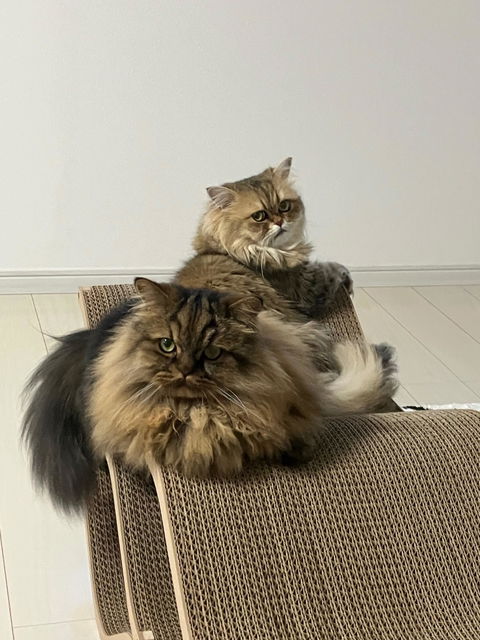
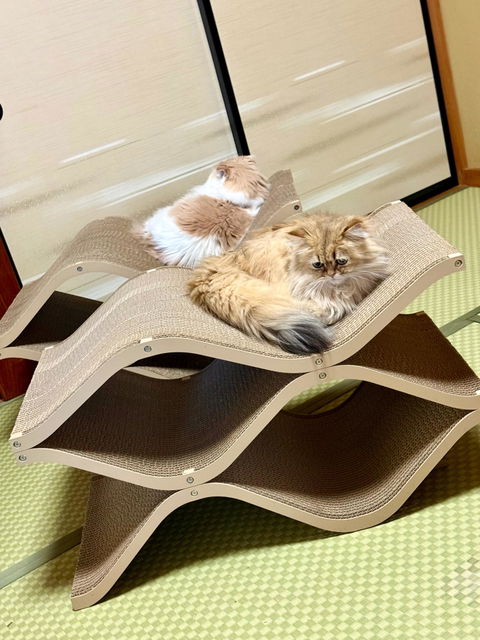
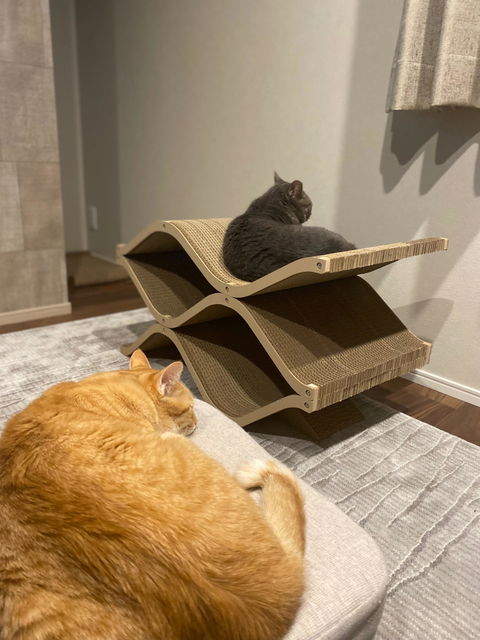
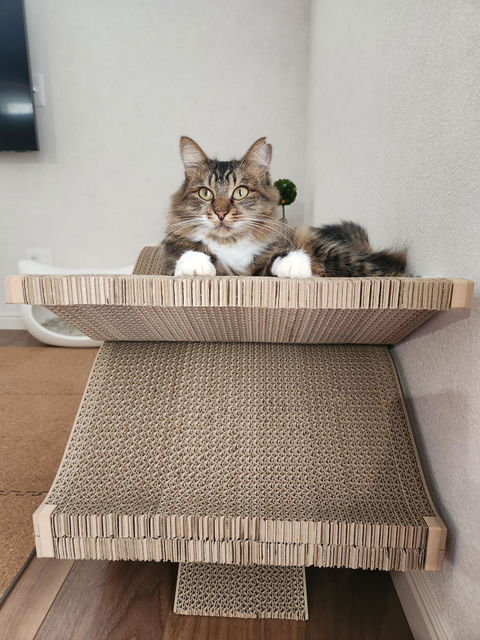
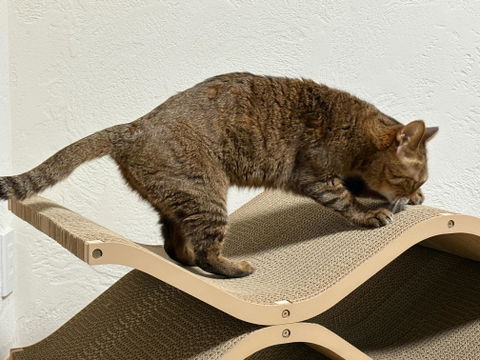
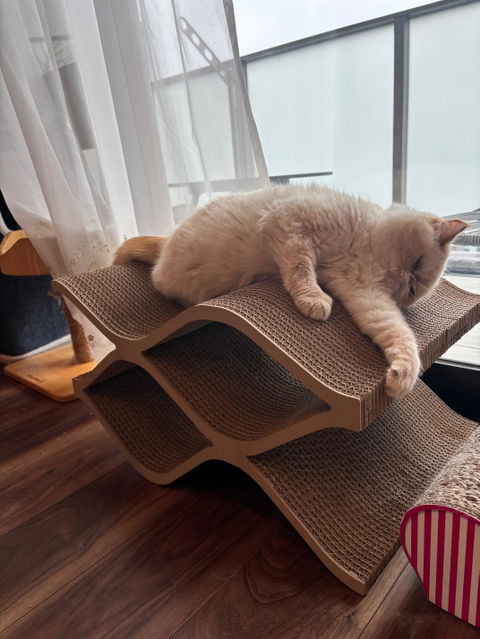
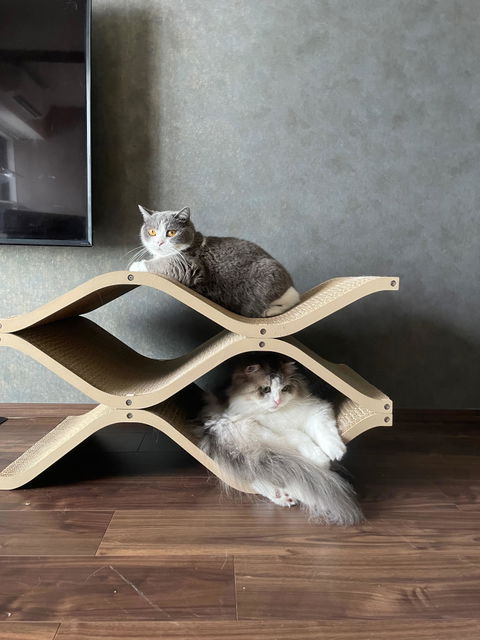
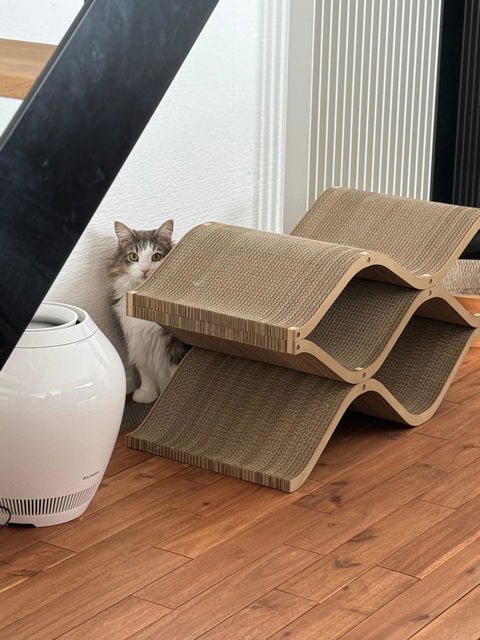
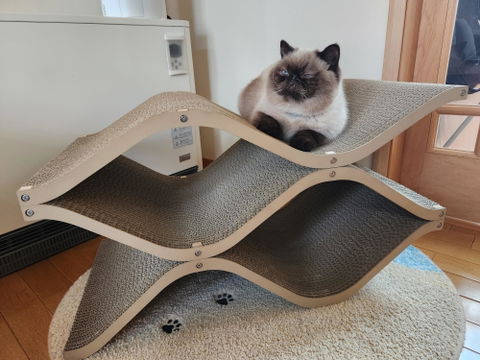
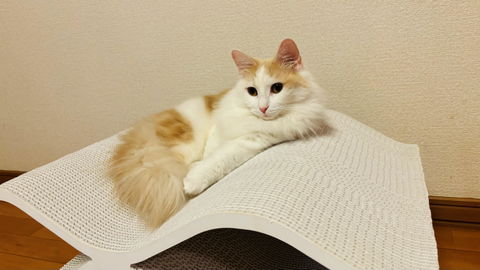
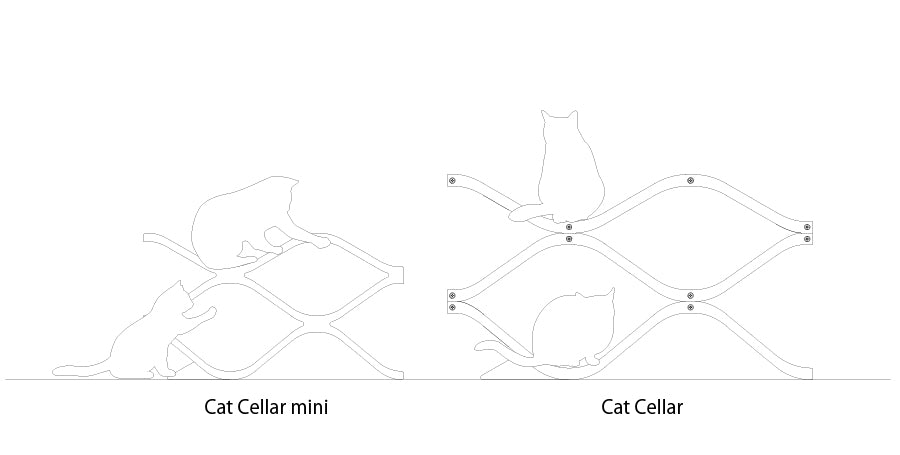
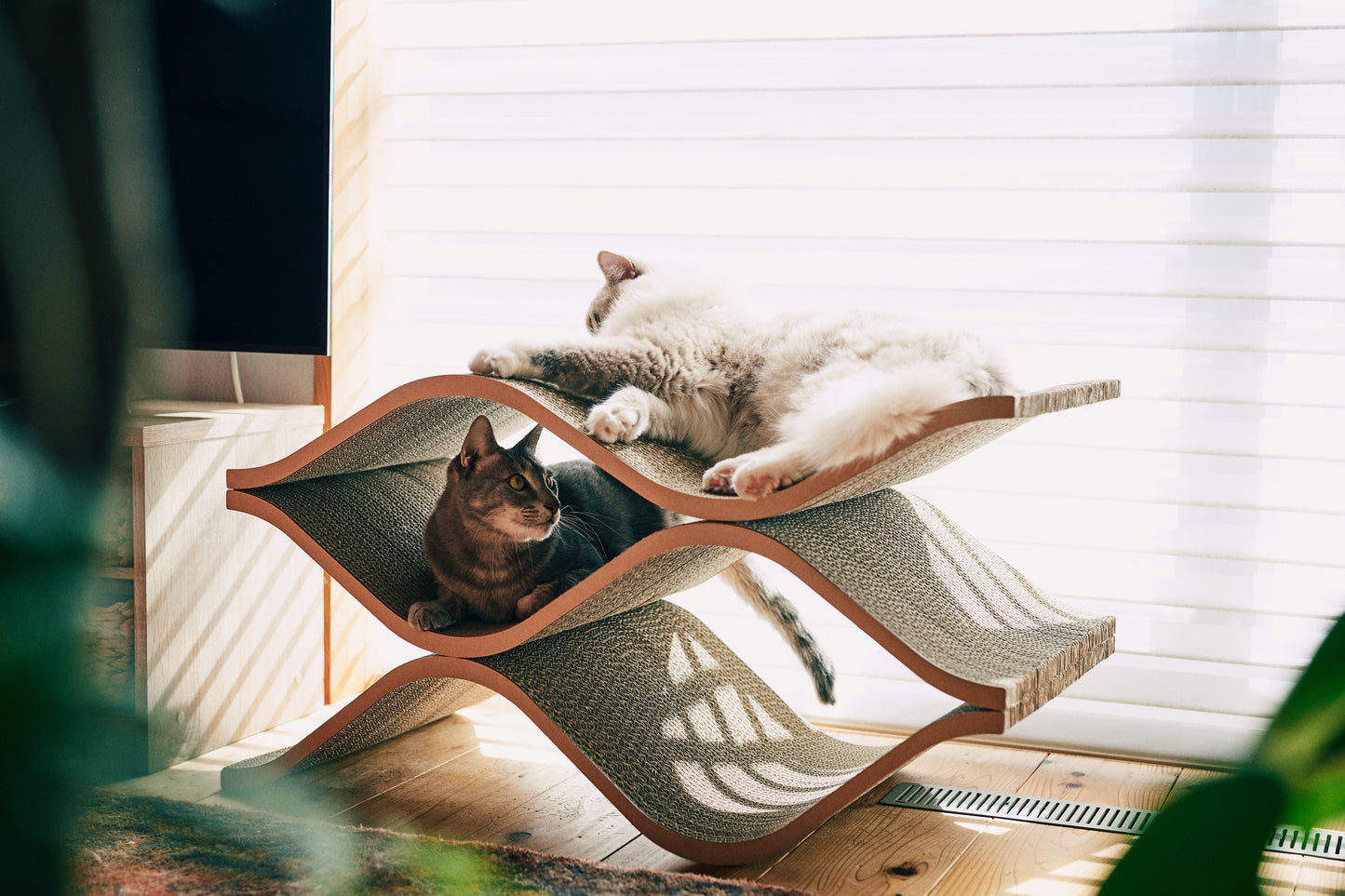
Cat Cellarは、ダンボールの薄い壁で外の気配を程よく遮りつつ、複数の穴から外を覗ける構造になっています。高さも一般的なキャットタワーより低く設計しているので、アフリカヤマネコが好んでいた「地面に近い隠れ家」に近い感覚で過ごしてもらえます。

Cat Cellarは爪とぎとしての機能でお選びいただくことが多いのですが、実際に届いてからは「いちばん長く中にいるのは、寝ている時間」というお宅も少なくありません。一台で爪とぎ・隠れ家・休息場所を兼ねられるので、お部屋に置く家具を増やしすぎたくない方にとっても、損のない選択肢として考えていただけるかと思います。
使い方に関して質問がある方はお気軽に公式LINEからメッセージ頂けますと幸いです。お客様担当のスタッフが回答させて頂きます。
※参考:
・Ursin, R. (1968) The two stages of slow wave sleep in the cat and their relation to REM sleep. Brain Research, 11(2): 347-356.
・The Ohio State University Indoor Pet Initiative "Resting Areas"
・Sleep Foundation "How Much Do Cats Sleep?"
・African wildcat (Felis lybica) — 生態学文献より







![[10%off] Cat Cellar & Cat Cellar mini set](http://furnya.myshopify.com/cdn/shop/files/ChatGPT_Image_2026_7_14_10_47_09.png?v=1784117296&width=1445)
![[10%off] Cat Cellar & Cat Cellar mini set](http://furnya.myshopify.com/cdn/shop/files/ChatGPT_Image_2026_7_22_13_58_41.png?v=1784696340&width=1445)
![[10%off] Cat Cellar & Cat Cellar mini set](http://furnya.myshopify.com/cdn/shop/files/custome.png?v=1784660252&width=1445)