

猫ちゃんが一見「休んでいる」ように見えるその姿勢、じつは室内で暮らす中で抱える、ある欲求と深く結びついているのかもしれません。

2021年に Applied Animal Behaviour Science に発表された研究で、興味深い結果が報告されています。室内のみで暮らす猫と、外に出る機会がある猫の31頭を対象に、獲物に似たおもちゃや、鳥のさえずり・紙のくしゃくしゃ音・小動物の鳴き声などへの反応を比較したところ、室内のみで暮らす猫のほうが、獲物に似た音をより早く探し始め、より長く調べ続けたそうです。外に出る猫のほうが「狩り慣れている」はずなのに、結果は逆。研究者は、本物の獲物に触れる機会がないことが、かえって潜在的な獲物のサインへの感受性を高めているのではないかと考察しています。
別の総説論文(Delgado & Hecht, 2019)では、猫の遊びには本来、捕食シーケンスがそのまま組み込まれていることが示されています。獲物を探す、忍び寄る、待ち伏せる、突進する、捕まえる。このうち、おもちゃ遊びで満たされやすいのは「突進する」「捕まえる」の部分です。一方で「待ち伏せる」「身を潜めて獲物を観察する」という前半の静かな段階は、家庭の中ではなかなか満たしてあげる場所がないようです。

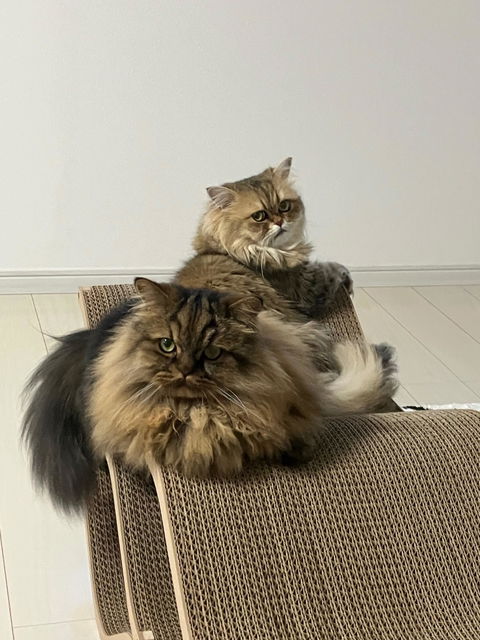
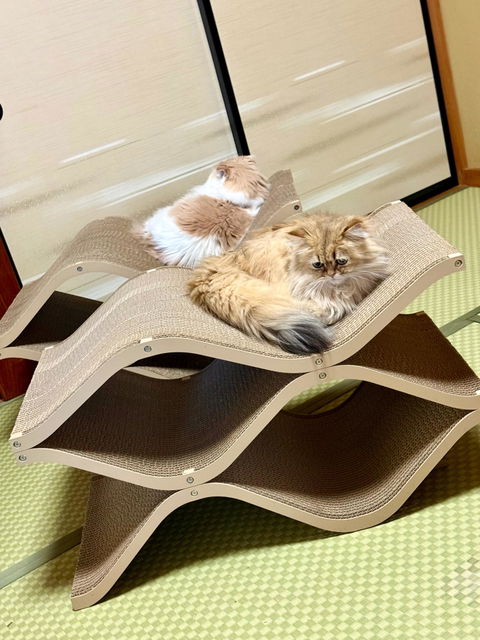
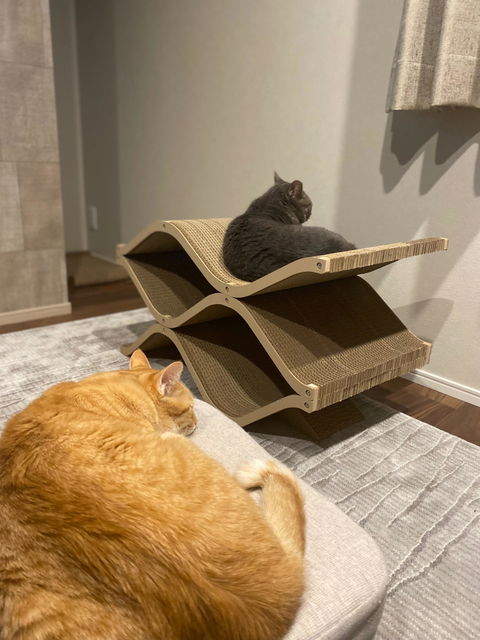
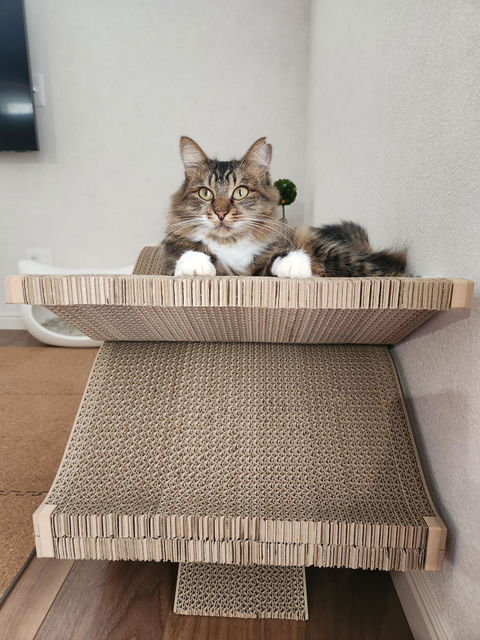
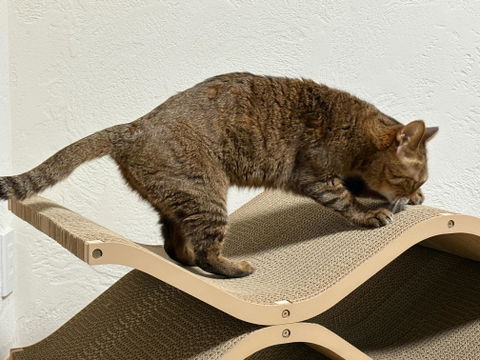
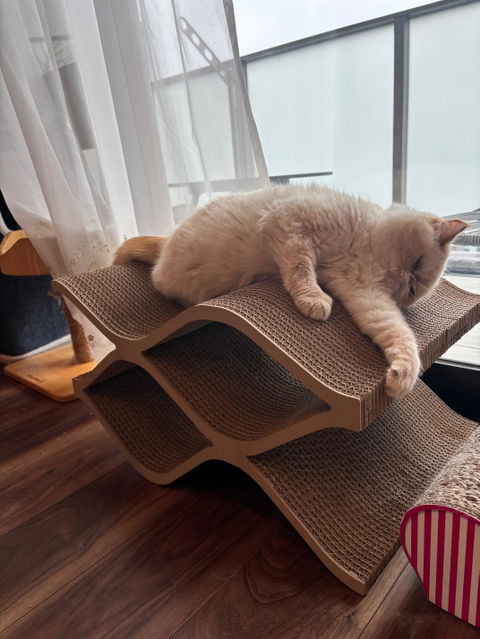
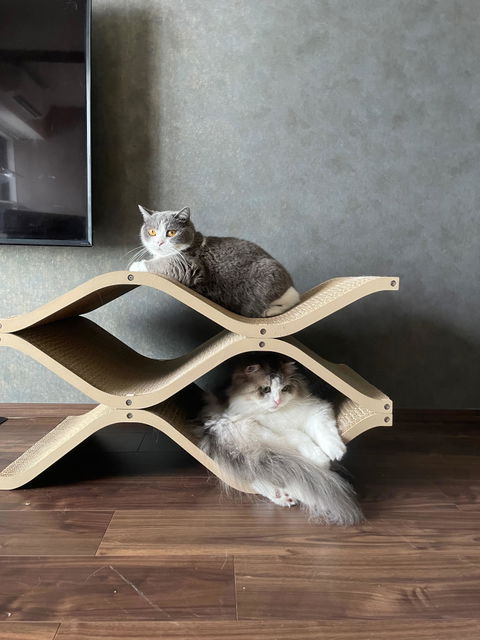
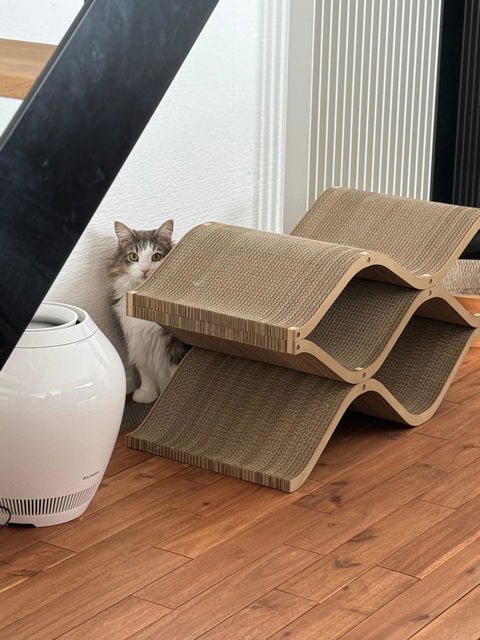
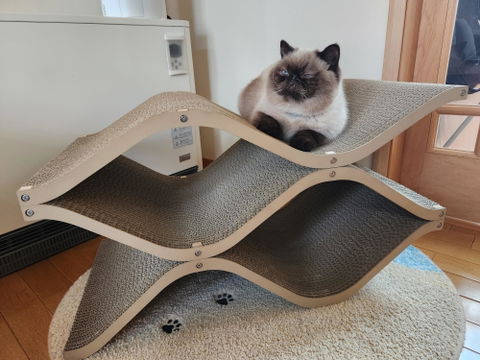
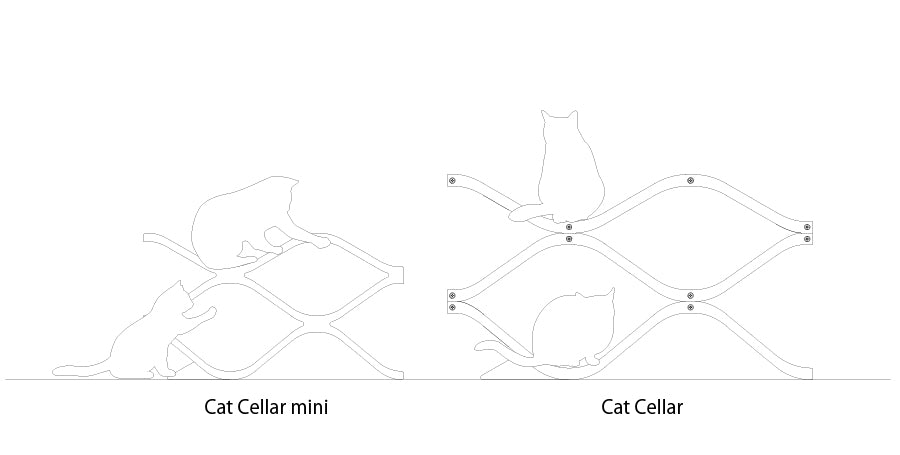
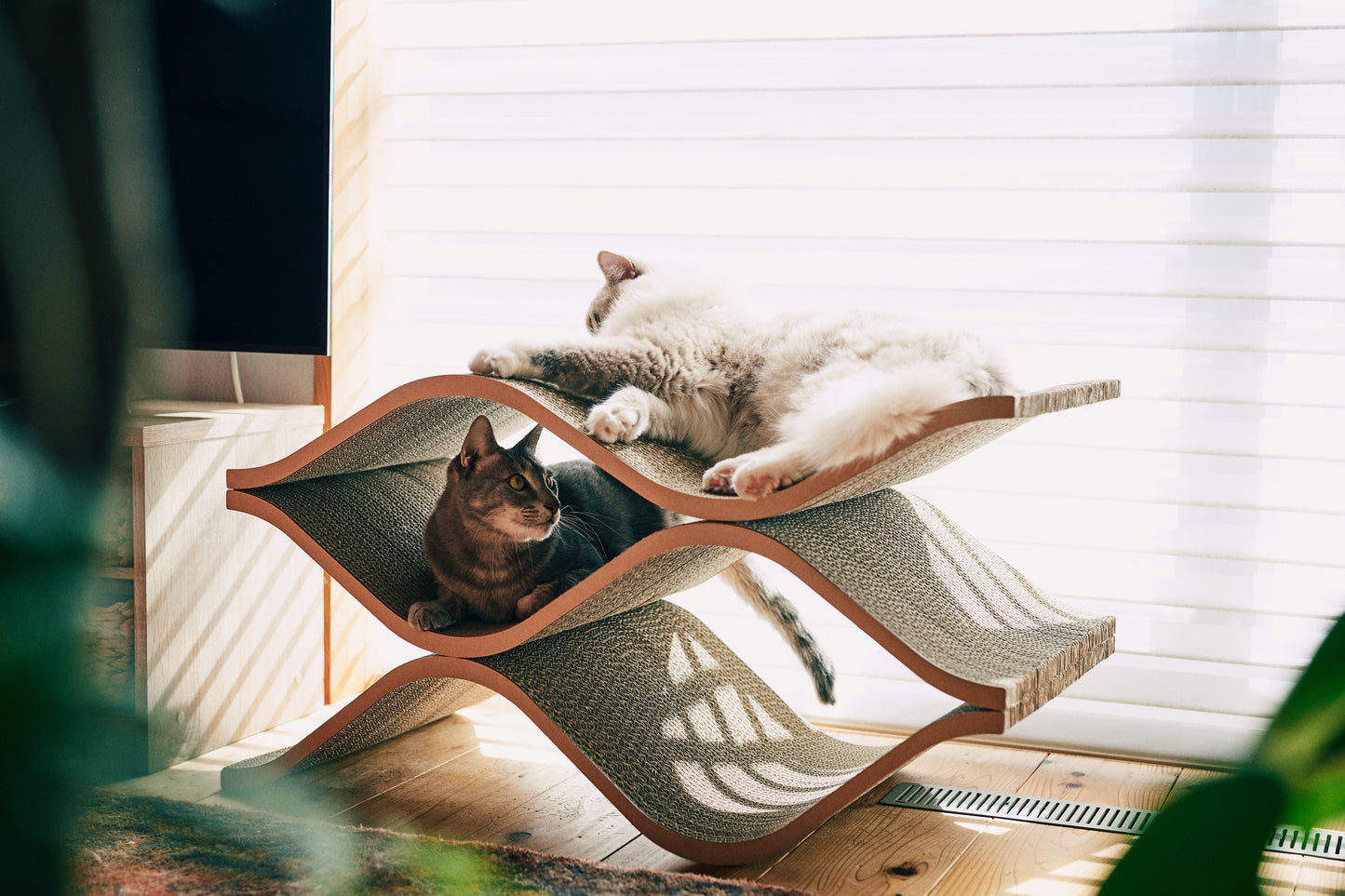
Cat Cellarは、もともと爪とぎ兼インテリアとして企画された家具ですが、この「待ち伏せの場所」としての使われ方も多いようです。S字のウェーブ構造に沿って空いた複数の穴は、外から見るとすべてが見えているわけではなく、内側に入ると視界が絞られます。これがちょうど、巣穴から獲物をうかがう猫の本能的な姿勢に重なるようです。穴をくぐって反対側に抜ける動線も、ただの通路ではなく、移動と探索を兼ねた小さな冒険になっているように見えます。
さらに、薄いダンボール板で構成されているため、別の穴に入った猫ちゃんの気配がうっすらと伝わります。多頭飼いのご家庭では、一頭が穴に潜んでいるところに、もう一頭がそっと近づいて覗き込み、追いかけっこに発展していく光景もよく見られます。これも、本来の狩猟行動が変形したコミュニケーションの一種と言えそうです。

室内で安全に暮らす猫ちゃんは、十分な食事と快適な気温に恵まれている代わりに、自然界では当たり前だった「身を潜めて、世界を観察する時間」を持ちにくくなっています。研究で示された「室内猫のほうが獲物への感受性が高い」という結果は、見方を変えれば、室内猫こそ捕食本能を満たす場所を必要としているということでもあります。動的なおもちゃ遊びだけでは届かない、静かで内向きの欲求。Cat Cellarがその一部を引き受けられる家具になれていたら嬉しく思います。
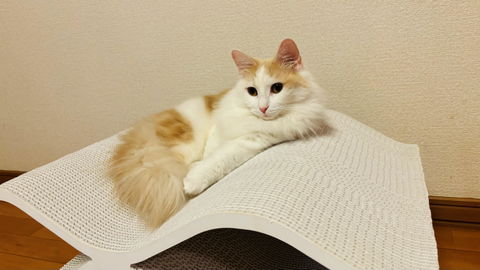
爪とぎとしての機能はもちろん、休む場所、隠れる場所、そして小さな狩りの舞台として、暮らしの中で多面的に使っていただけます。インテリアとしての佇まいを保ちながら、猫ちゃんの本能をそっと満たす存在として、選んでいただけますと幸いです。
使い方に関して質問がある方はお気軽に公式LINEからメッセージ頂けますと幸いです。お客様担当のスタッフが回答させて頂きます。
※参考:Strickler, B. L. & Shull, E. A. (2021). Inexperienced but still interested – Indoor-only cats are more inclined for predatory play than cats with outdoor access. Applied Animal Behaviour Science, 241, 105383. / Delgado, M. & Hecht, J. (2019). A review of the development and functions of cat play, with future research considerations. Applied Animal Behaviour Science, 214, 1–17.







![[10%off] Cat Cellar & Cat Cellar mini set](http://furnya.myshopify.com/cdn/shop/files/ChatGPT_Image_2026_7_14_10_47_09.png?v=1784117296&width=1445)
![[10%off] Cat Cellar & Cat Cellar mini set](http://furnya.myshopify.com/cdn/shop/files/ChatGPT_Image_2026_7_22_13_58_41.png?v=1784696340&width=1445)
![[10%off] Cat Cellar & Cat Cellar mini set](http://furnya.myshopify.com/cdn/shop/files/custome.png?v=1784660252&width=1445)