

「猫は気まぐれで、飼い主のことをそれほど気にしていない」と言われることがあります。けれど最近の動物行動学の研究では、猫が私たちを"心の安全基地"として深く頼りにしていることが、はっきりと示されつつあります。

引っ越しや来客、病院からの帰宅、家具の配置換え、掃除機の音。普段と違う出来事があったとき、猫がベッドの下やソファの奥、押し入れの隙間に潜り込んで出てこなくなる。こんな姿を見た経験は、多くの飼い主さんに共通するのではないでしょうか。「せっかく呼んでも出てきてくれない」と少し寂しく感じる瞬間でもあります。
けれど猫のこの行動は、飼い主を避けているわけでも、嫌っているわけでもないようです。むしろ「飼い主がそばにいる安心感」をベースにしたうえで、そこから少し距離を取って神経を整えているだけだと考えられています。静かに一人になれる場所があるからこそ、猫はまた安心してあなたのそばに寄って来られるのです。
この"飼い主=心の拠り所"という感覚を、科学的に裏づける研究が2019年に発表されました。アメリカ・オレゴン州立大学のクリスティン・ヴィターレ博士らが学術誌『Current Biology』に発表した「家庭の猫と人間のあいだの愛着の絆」という論文です。人間の乳児や犬の愛着研究で古くから使われてきた"安全基地テスト"を、猫にも適用した研究でした。
テストの流れはシンプルです。猫と飼い主を見慣れない部屋に入れ、二分ほど過ごしたあと飼い主だけが退室する。しばらくして戻ってくる。このとき、飼い主を安全基地として認識している猫は、戻ってきた飼い主に近づいて挨拶したり、軽く体を擦り寄せたあと、また落ち着いて部屋を探索しはじめるという独特の行動パターンを見せます。結果、テストに参加した猫のおよそ64%がこの"安全型愛着"に分類されました。人間の乳児でこの型に当てはまる割合はおよそ65%。犬ともほぼ変わりません。
気まぐれに見える猫の内側には、私たち人間の赤ちゃんと同じくらい確かな「この人がいれば大丈夫」という感覚が育っていたのです。ヴィターレ博士は、猫が飼い主を単なる食事係ではなく、情緒的な拠り所として認識している可能性を指摘しています。さらにこの研究では、子猫のうちに形成された安全型愛着が、大人になっても大きく変わらないことも確認されました。猫と飼い主のあいだの絆は、一度できあがると長く続いていく性質のもののようです。

ただ、研究を読み解いていくと、もうひとつ見えてくることがあります。"飼い主という心の安全基地"だけでは、猫は完全には休まれないということです。猫はもともと「狭くて、暗くて、外の気配だけは感じ取れる」場所で眠ることで神経を整えてきた生き物です。そんな物理的な避難所があって初めて、飼い主への愛着も安定して発揮できる、という見方が研究者のあいだで共有されています。だから飼い主がそばにいても、身を潜められる場所がなければ、猫は完全にはリラックスできません。ベッドの下やクローゼットの奥、時には洗面所の棚の裏に逃げ込むのは、その補完行動とも言えます。
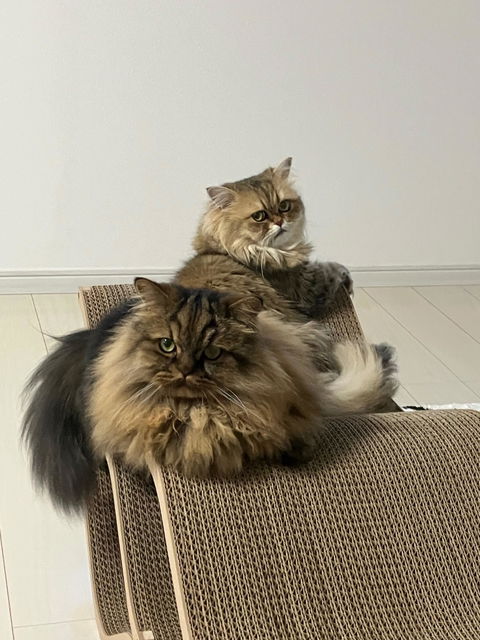
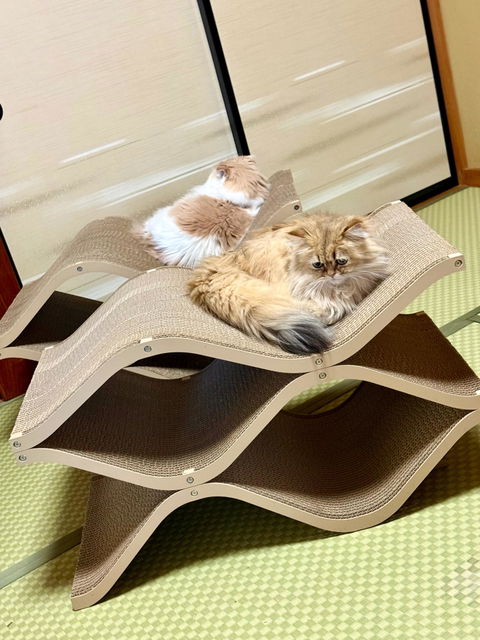
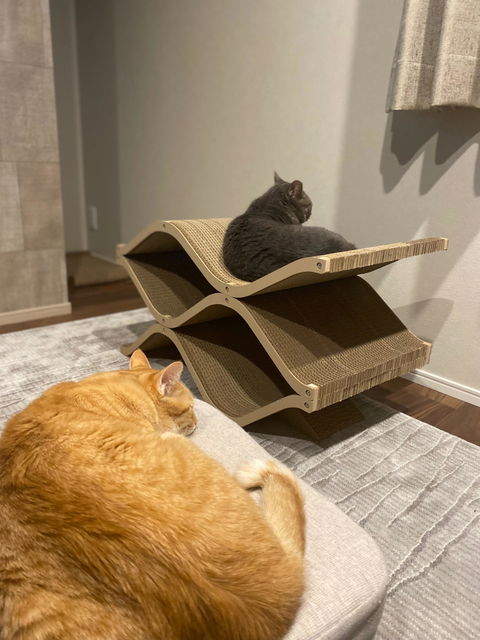
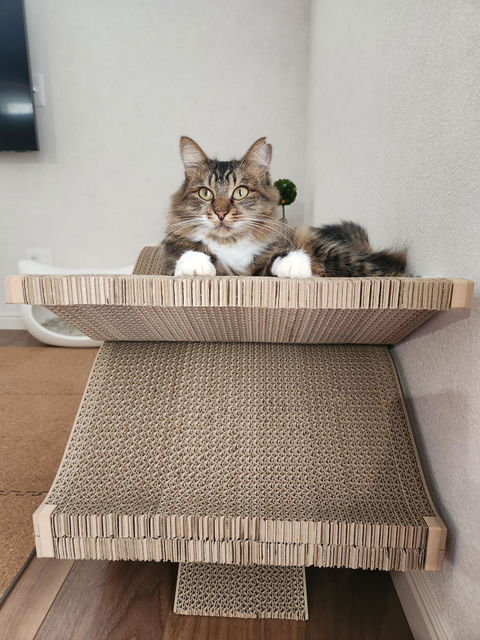
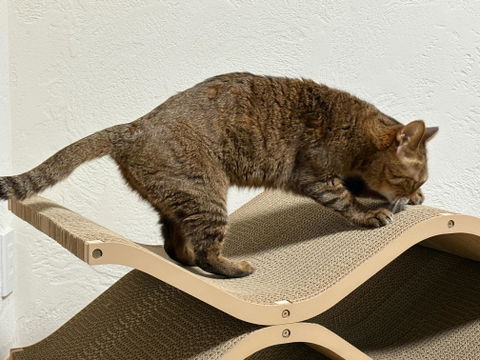
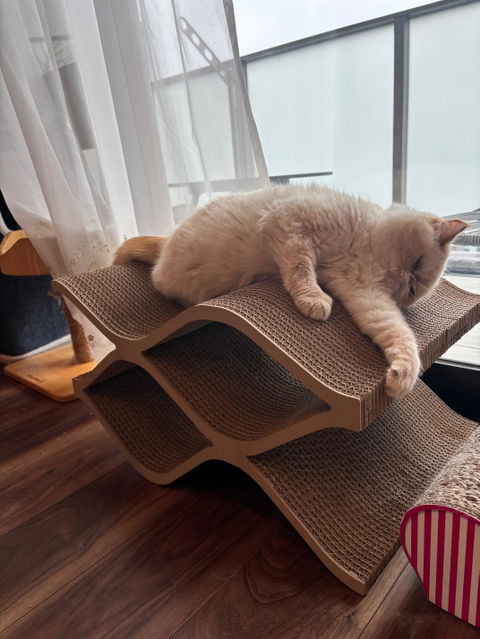
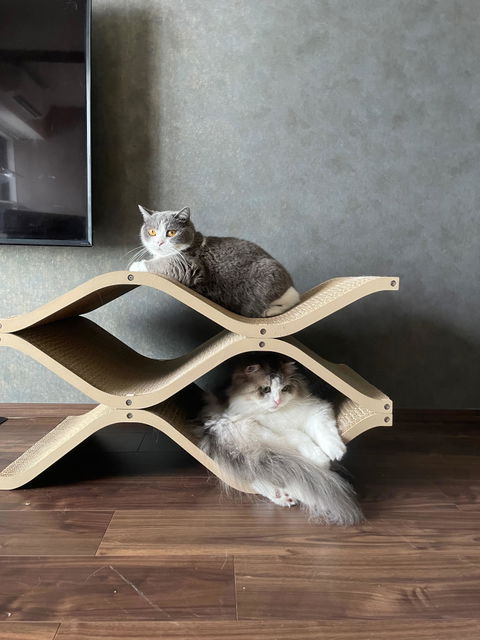
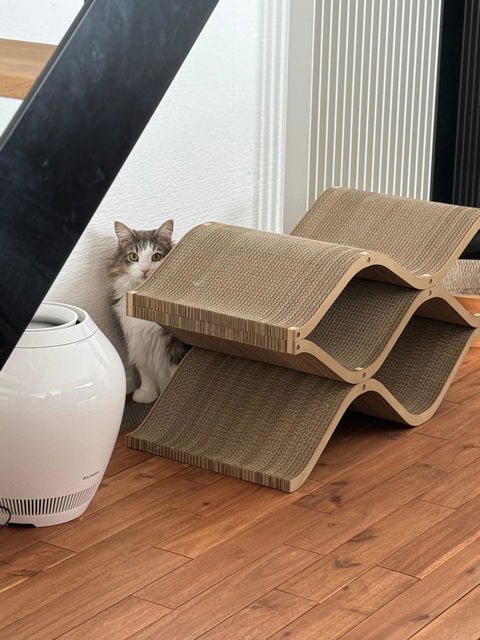
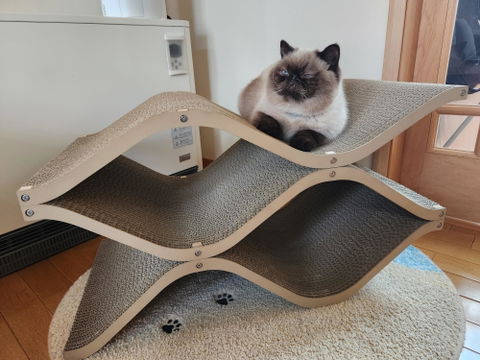
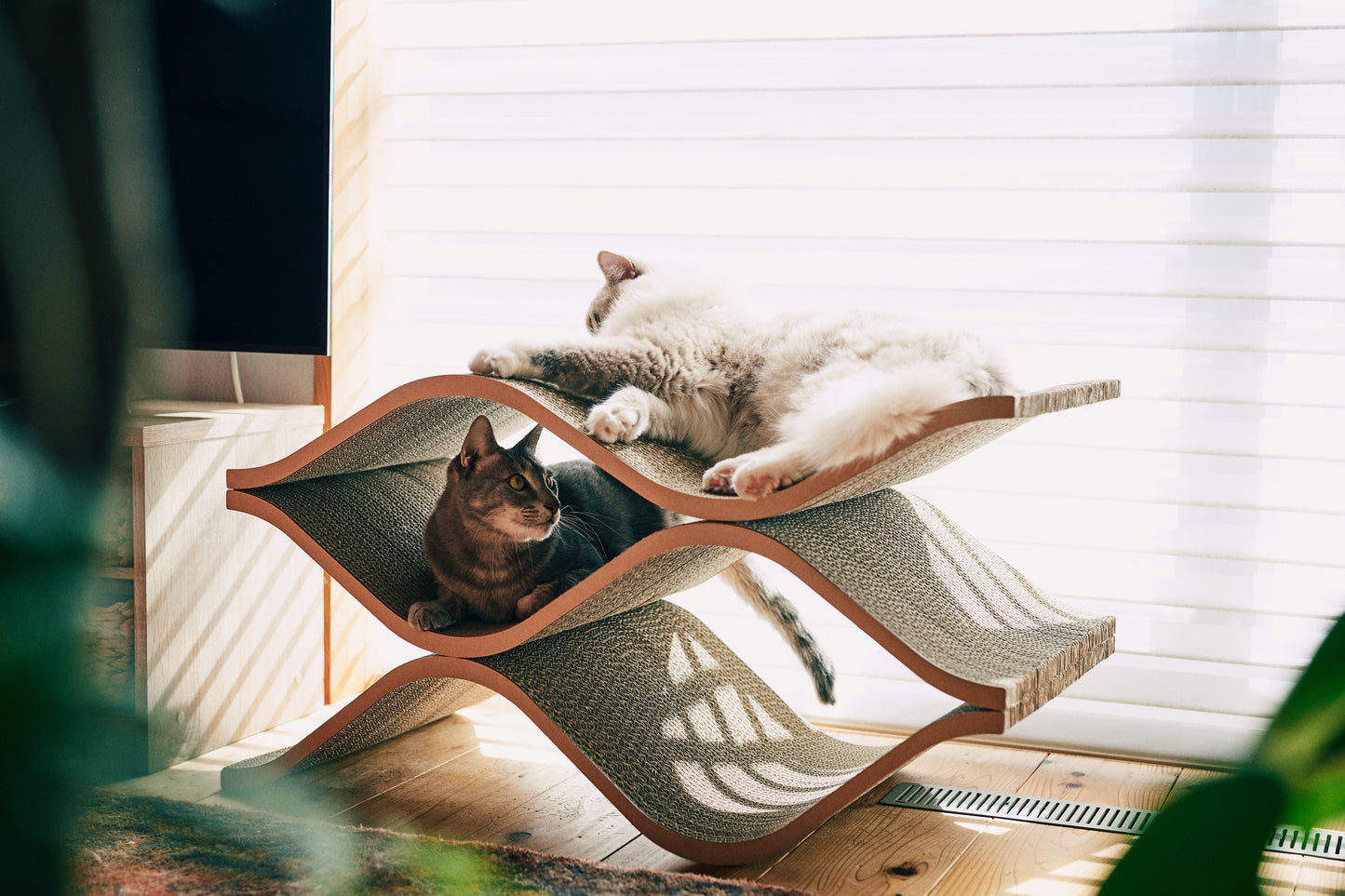
Cat CellarのS字ウェーブ構造と複数の穴から、飼い主の声や気配はしっかり届く。けれど本体の中に身を収めれば、猫自身は外からほぼ見えない。「飼い主は見える、でも自分は隠れている」という絶妙な距離感を猫自身が選べるようになっています。

猫の安心を考えるとき、飼い主という心の拠り所に加えて、猫が自分で選んで入れる「もう一つの安全基地」を家のなかに用意してあげることには、きっと意味があるはずです。研究者が示してくれた「猫にとっての安心の仕組み」を、日々の暮らしに自然に落とし込むための一つの答えになると、私たちは考えています。
Cat Cellarは爪とぎ機能も備えたインテリア家具として、お部屋の景観を損なわずに猫の安心を一台で叶える設計になっています。猫がいつでもあなたのそばで、自分のペースで落ち着いて過ごせるように。そんな願いを込めた、損のない一台としてご検討いただけますと幸いです。
使い方に関して質問がある方はお気軽に公式LINEからメッセージ頂けますと幸いです。お客様担当のスタッフが回答させて頂きます。
※参考:Vitale, K.R., Behnke, A.C., & Udell, M.A.R. (2019). Attachment bonds between domestic cats and humans. Current Biology, 29(18), R864–R865.







![[10%off] Cat Cellar & Cat Cellar mini set](http://furnya.myshopify.com/cdn/shop/files/ChatGPT_Image_2026_7_14_10_47_09.png?v=1784117296&width=1445)
![[10%off] Cat Cellar & Cat Cellar mini set](http://furnya.myshopify.com/cdn/shop/files/ChatGPT_Image_2026_7_22_13_58_41.png?v=1784696340&width=1445)
![[10%off] Cat Cellar & Cat Cellar mini set](http://furnya.myshopify.com/cdn/shop/files/custome.png?v=1784660252&width=1445)