When I watch my cat at home for a while, there are moments when I feel like they are such busy animals. One moment they leap onto a shelf, then stretch sideways on the armrest of the sofa, and five minutes later, they're curled up asleep in the corner of the room. The transition between movement and stillness is extreme, giving a very different impression from dogs, who tend to move at a constant rhythm. This extremity is endearing, but it also offers a clue when choosing furniture. Today, I'll explore the feline body based on descriptions from two books I have.

This "busyness" isn't capriciousness; it stems from their physical structure. The beginner's official guide to the Cat Aptitude Test states that a cat's physical abilities can be broadly categorized into four types: balance (walking on narrow surfaces), twisting (turning in mid-air), dashing (full-speed short sprints), and jumping (vertical leaps). Thinking back to scenes at home, I realize that after walking like a tightrope walker on the top edge of a bookshelf, a cat might twist in mid-air as if falling, then run and slide under a desk, and finally jump onto the back of a chair. Indeed, most of their movements fall into one of these four categories. Conversely, it might mean that cats are animals who don't have the option of "moving slowly and continuously" for extended periods.
The intermediate and advanced editions delve deeper into skeletal structure. A cat's spine is flexible, allowing for complex, three-dimensional postures. Their clavicles are also more developed compared to other animals, enabling dexterous use of their front paws. The ability to adopt "twisted postures"—such as sticking only their front paws into a gap in the furniture while their body faces the other way, or stretching only their back legs while keeping their head up—seems to be rooted in this skeletal flexibility. Regarding muscles, it notes that they have many white muscles (fast-twitch) and few red muscles (slow-twitch). This body type excels in explosive power but is not suited for endurance. A cat immediately lying down after a dash can be interpreted not as laziness, but as operating on the principle of "short bursts of activity followed by long rests."
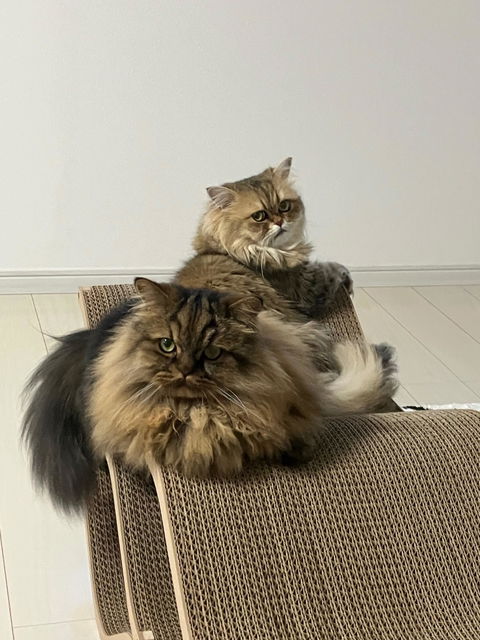
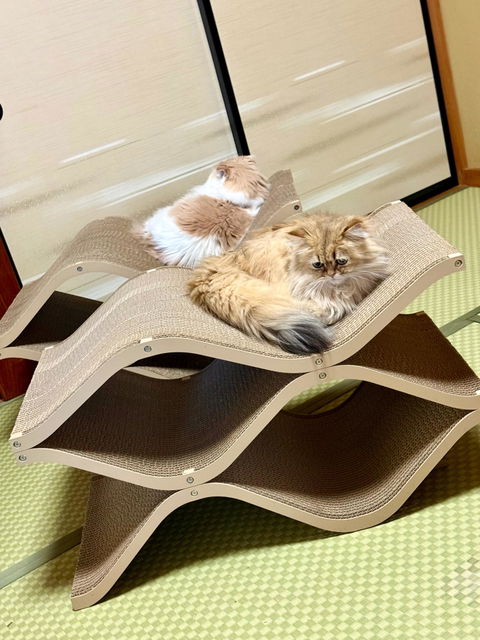
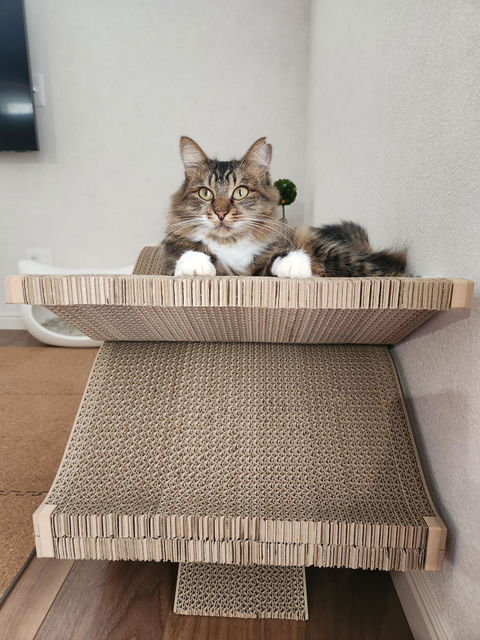
Moreover, a cat's "resting posture" is not limited to just one type. They might curl up with their front paws tucked in, stretch out lazily on their side, hide their body with only their head peeking out, or lie down with their front paws dangling. Depending on the temperature, sound, mood, or physical condition, their posture changes even in the same spot. In a narrow, completely enclosed box, it can be difficult for them to switch between these various resting positions.

When we think about cat furniture, we tend to start with questions like "how high can they climb?" or "how long of a movement path can we create?" However, based on the descriptions so far, the starting point should be elsewhere. If cats move in short bursts and rest frequently, then it seems more in line with their natural body rhythm to provide places where they can quickly settle after movement, with options for various resting postures. Looking at the places cats frequent in the home, isn't the ability to "twist and relax" or "peek out with just their head" more of a reason for them to stay there longer, rather than just ease of climbing?
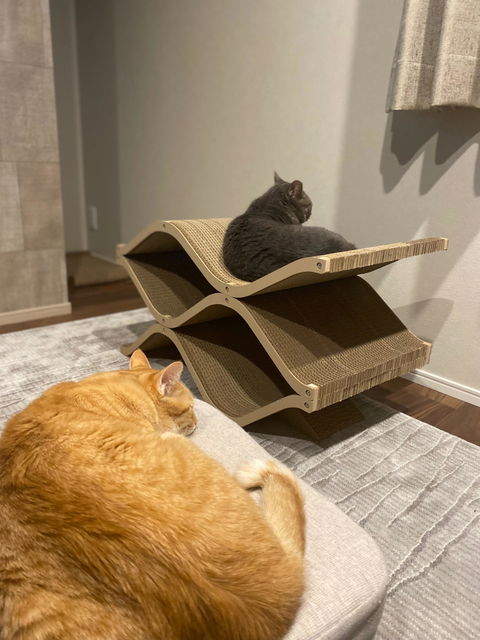
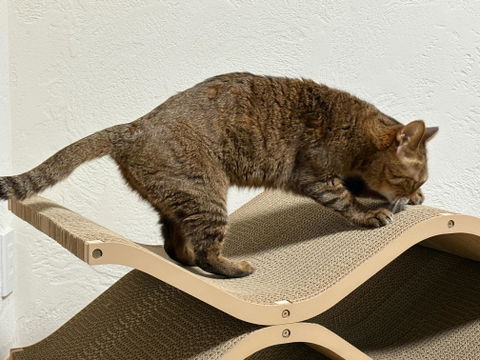
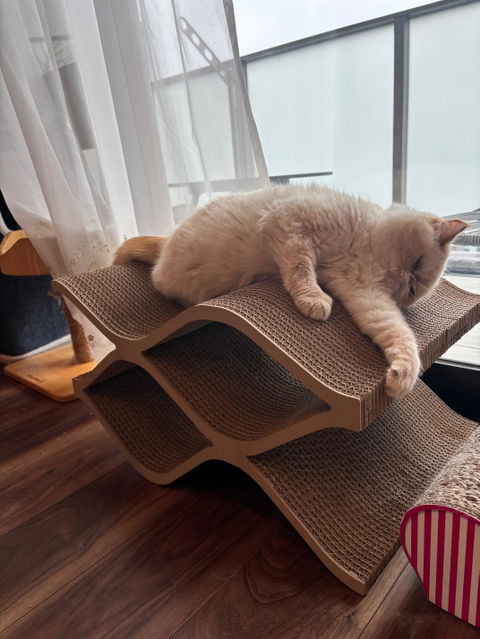
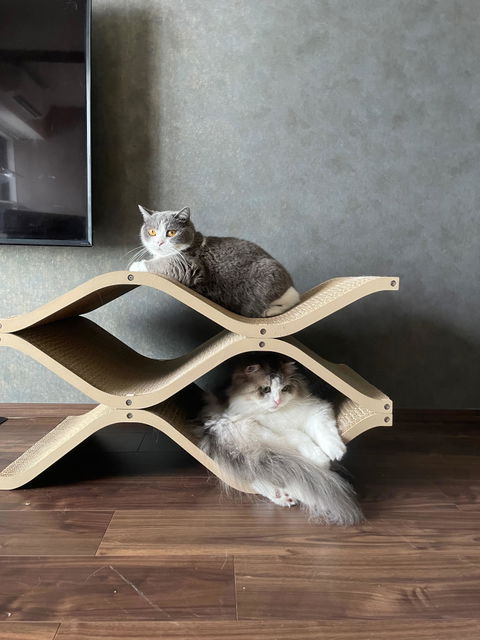
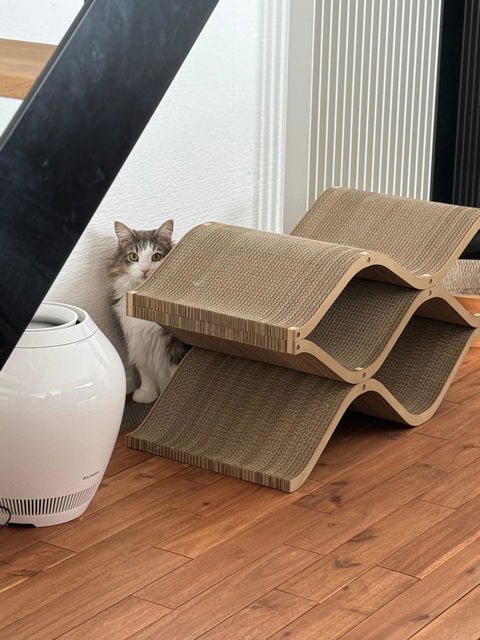
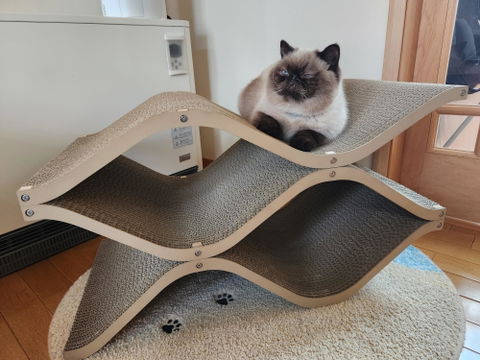
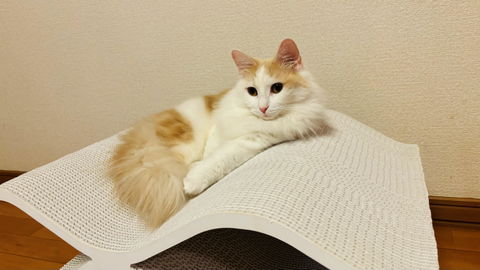
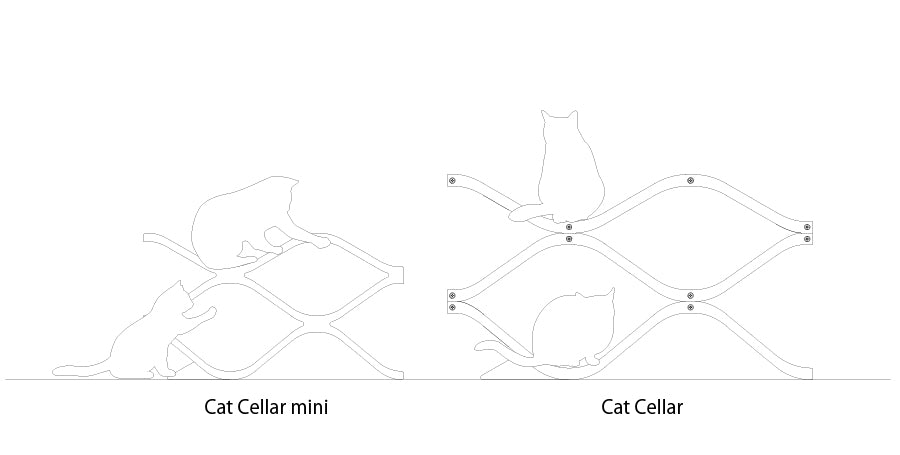
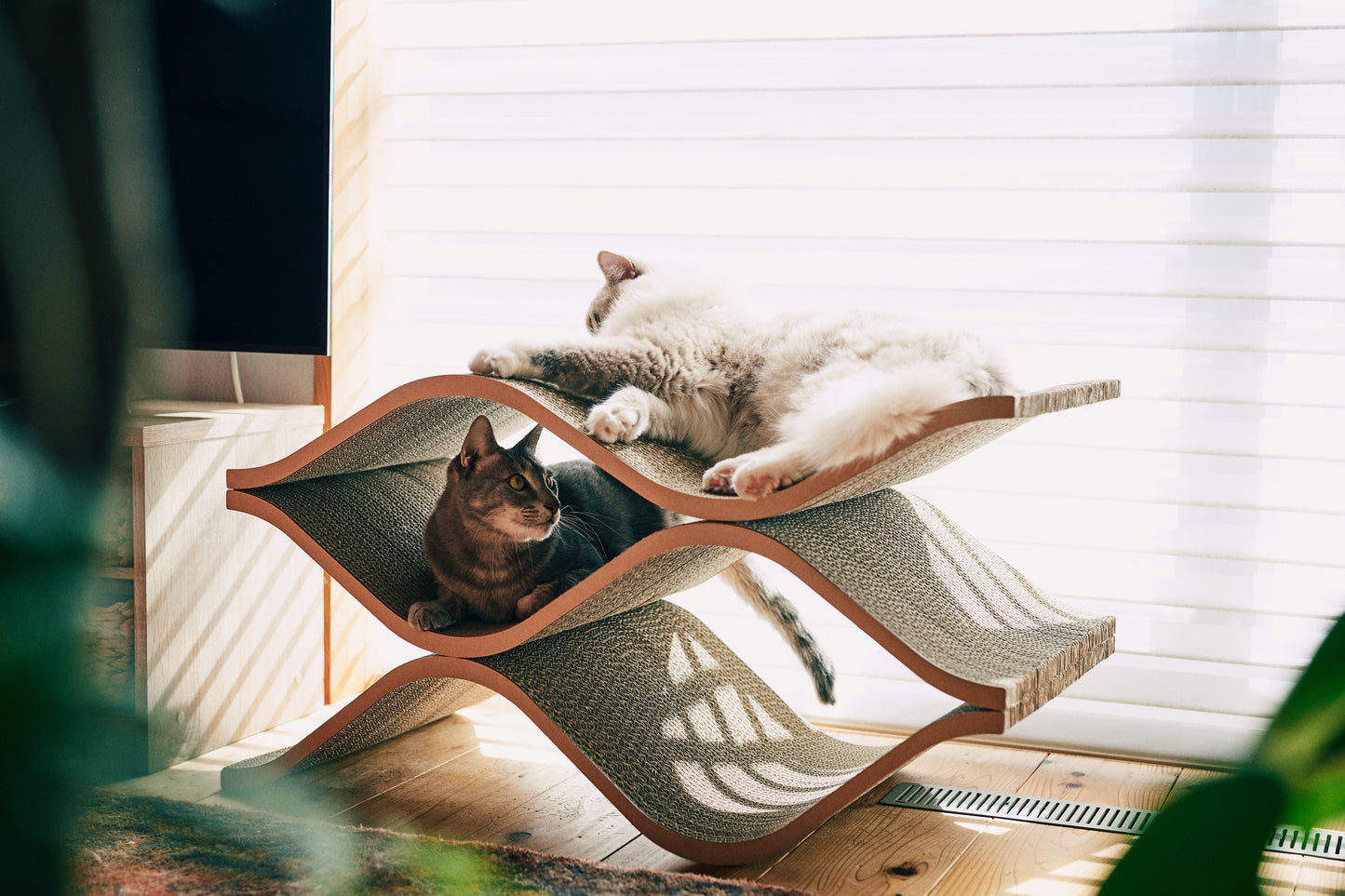
Cat Cellar features gaps reminiscent of a wine cellar. It allows for several postures within a single piece of furniture, such as sticking only their head in while their body remains outside, twisting and curling up sideways, or lying on top with their front paws dangling. The height is also lower than a cat tower, making it a comfortable height for senior cats, small cats, or those who have become a little more cautious about jumping. In multi-cat households, each cat can adopt a different posture in the upper and lower waves or inside and outside the holes, naturally allowing them to maintain distance while resting and sensing each other's presence through the thin cardboard.

Based on the book's descriptions, isn't it often the case that cats aren't inactive, but rather spend "a long time resting after moving"? If so, what is required of furniture is not so much a mechanism to increase activity, but a shape that can immediately accommodate them after their four types of movement, and the space to change postures within that shape. The Cat Cellar doesn't make a big statement in your home, but it aligns with a cat's body rhythm, making it a worthwhile piece of furniture.
If you have any questions regarding how to use it, please feel free to send us a message via our official LINE account. Our customer service staff will be happy to assist you.
*References: Official Guidebook for Neko Kentei (Cat Aptitude Test) Beginner's Edition (New Edition) p.36-37 "Physical Abilities/Paw Functions" / Official Guidebook for Neko Kentei (Cat Aptitude Test) Intermediate/Advanced Edition (New Edition) p.24-25 "Body Structure"

![[10%off] Cat Cellar & Cat Cellar mini set](http://furnya.myshopify.com/cdn/shop/files/ChatGPT_Image_2026_8_24_15_31_55_010ef098-0a26-4fb7-98d5-51d506349356.png?v=1787553188&width=1445)